
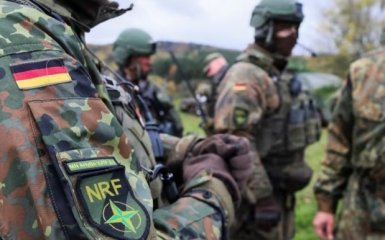
German Chancellor Friedrich Merz's cabinet has approved a bill to speed up military planning and procurement, part of the ruling coalition's efforts to quickly transform the Bundeswehr into Europe's strongest army.
Points of attention
- Germany aims to turn the Bundeswehr into the most powerful army in Europe, with a bill approved to speed up military planning and procurement.
- The legislation includes relaxing mandatory tendering requirements for defense contracts, amendments to planning laws for radar systems and military airfields, and relaxed environmental standards for military infrastructure construction.
- Defense Minister Boris Pistorius highlighted the importance of removing restrictions to accelerate the transformation process, especially in urgent cases.
Germany to transform Bundeswehr into Europe's strongest army
"With this bill, we are removing many restrictions that prevented us from moving even faster," said Defense Minister Boris Pistorius.
Under the proposed bill, mandatory tendering requirements for defense contracts would be relaxed or completely abolished in particularly urgent cases. Large contracts would no longer need to be broken down into smaller tenders.
It also contains amendments to the planning law relating to air defence radar systems and military airfields.
Environmental standards will also be relaxed — for example, when building military barracks.
In addition, the bill also provides for better protection of military airports. In particular, construction near air traffic control radar stations will be prohibited.
The law is valid until 2035.
Earlier this year, Chancellor Friedrich Merz relaxed constitutionally mandated national debt limits to allow for higher defense spending.
The move allowed Berlin to increase defense spending to 3.5% of GDP by 2029 — a sharp increase from NATO's 2% quota, which it met in 2024 for the first time in three decades.
The historic policy shift, after years of neglect of the armed forces, was triggered by Russia's full-scale invasion of Ukraine in February 2022. It accelerated as Vladimir Putin came to be seen as a growing threat to NATO's eastern flank.
More on the topic
- Category
- World
- Publication date
- Додати до обраного


