
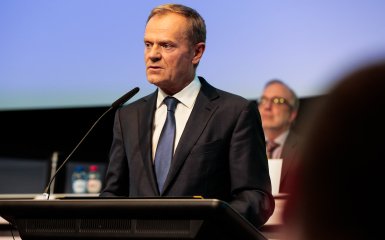
The government under the leadership of Polish Prime Minister Donald Tusk intends to oppose the continuation of the duty-free trade regime with Ukraine.
Poland wants to cancel the free-duty trade with Ukraine
According to journalists, the European Commission will offer the EU countries an extension of the duty-free trade regime with Ukraine until June 2025.
However, the decision must be taken by a majority of EU member states, while Poland is already planning to oppose it.
The interests of Polish farmers, our food security and profitable production are a priority, Michal Kolodziejczak, Deputy Minister of Agriculture of Poland says.
The authors of the material emphasise that the Tusk government's continuation of the protectionist policy of its predecessors from the government of Mateusz Morawiecki is a violation of the public promises of the current Polish Prime Minister regarding changes in the policy towards Ukraine.
This highlights the difficulty for the Polish prime minister to find a balance between his pro-European agenda and the interests of farmers and transporters who want to maintain the ban on imports and have been blocking the country's border crossings with Ukraine since November to force the government to support their demands, the article notes.
Journalists also draw attention to the fact that after assuming the post of Prime Minister, Tusk did not dare to forcefully issue an order to unlock checkpoints on the border with Ukraine.
Tusk said on Friday that Poland would continue to give full support to Ukraine in its war against Russia. Still, he also promised to protect critical sectors of the Polish economy from unfair competition.
At the same time, he repeated the thesis of his predecessors that EU aid to Ukrainian agriculture is an incentive for agro-oligarchs, not small farmers.
What is known about the position of other EU countries
Currently, the heads of the Ministry of Agriculture of Bulgaria, Poland, Hungary, Romania, and Slovakia are demanding the European Commission to return the import duty on Ukrainian grain.
The Minister of Agriculture of Hungary, Istvan Nagy, said that they informed Brussels about the changes in the dynamics of Ukrainian EU exports and their countries' loss of grain and oil crops sales markets.
In recent years, farmers have been increasingly concerned about the increase in exports from Ukraine, in addition to problems related to high production costs, rising price and income risks, and adverse climatic conditions. The main reason for this is that Ukrainian agricultural products, which are cheaper due to different production standards and farm sizes, are being pushed out of their traditional export markets, the Hungarian minister said in a statement.
He called Brussels to introduce tariffs "on the most sensitive agricultural products" and stated that Ukrainian goods and agricultural products "often have questionable quality".
The five countries share a common position that Ukrainian agricultural exports do not have a negative impact on the European agricultural market. Therefore, Brussels must also ensure the consistent application of EU agricultural standards to all products offered to European consumers. We call on the European Commission to provide a report on the compliance of production standards in Ukraine with EU agricultural production standards, Nagy stressed.


