
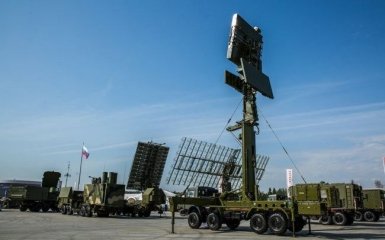
Ukrainian partisans from the ATESH resistance movement conducted reconnaissance in the territory of the Kacha airfield in occupied Crimea and discovered key Russian military facilities.
Points of attention
- Ukrainian partisans from the ATESH resistance movement discovered key Russian military facilities, including radar systems and advanced anti-aircraft missile complexes at the Kacha airfield in occupied Crimea.
- Kacha airfield serves as a strategic hub for the Russian Aerospace Forces, housing strike aircraft, logistics, and radar complexes that coordinate air strikes against Ukraine.
- The guerrillas highlight the constant threat posed by Russian air defense systems at Kacha airfield, with numerous strikes documented in recent months.
ATESH scouted Russian military facilities at the airfield in Kacha
According to traffic data, important radar systems are located on the airfield, including the Pantsir-S1 anti-aircraft missile and gun complex, the Podliet radar, and the P-18-2 radar.
Kacha airfield is a key hub of the Russian Aerospace Forces in occupied Crimea. It houses the strike aircraft of the 318th regiment, command posts, logistics, and radar complexes. These systems cover the southwest of the peninsula and ensure the coordination of air strikes by Ukraine.
The partisans recalled that in recent months the airfield had already been attacked in May, July, and on the night of July 23-24. As a result of the attacks, explosions and destruction were recorded in the Kacha and Orlovka areas.
This is not the end — new strikes on the Kacha airfield are just a matter of time. The data we received has been passed on to the Defense Forces of Ukraine.
"Pantsir-S1" is a Russian self-propelled anti-aircraft missile and gun complex. It is used for close cover of objects from air attack. It can protect the object from ground and surface threats.
Pantsir-S1 was created in 1994 and then modernized. It was adopted by the Russian army in late 2012.
The Podleot radar is a relatively new Russian radar station. It began to be supplied to the Russian army in 2015. The cost of the station is over 700 million rubles, or over 5 million dollars.
The enemy used this system to detect and transmit target coordinates to Russian S-300/S-400 anti-aircraft missile systems.
More on the topic
- Category
- Ukraine
- Publication date
- Додати до обраного


