
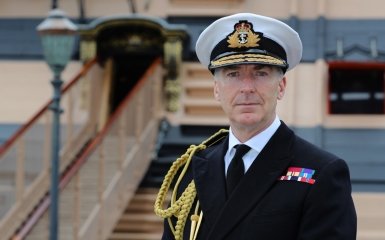
The Chief of the British Defense Staff, Admiral Anthony Radakin, has called for strengthening NATO's deterrence strategy in response to the growing threat from Russia. He emphasized that the world is on the threshold of a "new nuclear era".
Points of attention
- Admiral Radakin called on NATO to prepare for a new nuclear era due to the growing threat from the Russian Federation.
- NATO's deterrence strategy needs improvement due to the Kremlin's aggressive actions.
- Nuclear deterrence remains a key element of global security, according to Admiral Radakin.
- US intelligence assesses nuclear threats from Putin and warns of possible sabotage and cyberattacks by the Russian Federation.
The world is on the threshold of the "third nuclear age"
In a lecture at the Royal Joint Defense Research Institute (RUSI) in London, Admiral Anthony Radakin stressed that while the risk of a direct Russian attack on Britain or NATO remains low, the alliance needs to prepare for different scenarios.
The admiral noted that NATO's current deterrence strategy demonstrates its effectiveness, but needs improvement due to the Kremlin's aggressive actions. In his opinion, nuclear deterrence remains a key element of global security that influences decision-making in Moscow.
Radakin stated that the world has entered the "third nuclear age", which is determined by the increase in the number of nuclear states, the introduction of the latest technologies and the decrease in the effectiveness of existing security systems.
In addition to the Russian threat, he highlighted other global challenges, such as China's expanding nuclear capabilities, North Korea's growing ballistic missile programs and Iran's nuclear ambitions. Radakin called on NATO member states to cooperate more closely to create new international security mechanisms.
He also noted that the modern system of international security is in crisis due to the spread of destructive technologies and a decrease in trust in international treaties, emphasizing the need for a collective response to these challenges.
US intelligence assessed Putin's nuclear threats after allowing Ukraine to strike the Russian Federation
As noted, Russia is likely to increase hybrid methods of warfare, such as sabotage and cyber attacks, to pressure the West.
Despite Vladimir Putin's rhetoric and changes in Russia's nuclear doctrine, Moscow is reluctant to use nuclear weapons, according to U.S. intelligence, because it lacks a clear military advantage. The nuclear option is seen as an extreme step, which may be preceded by other forms of aggression, such as attacks on critical infrastructure, the intelligence says.
Russia is likely to intensify sabotage operations in Europe and cyber attacks to intimidate countries that support Ukraine.
In addition, Washington is concerned about possible attacks on US military bases or other strategic objects. At the same time, it is mentioned that there is an extensive network of agents in Russia that can be involved in such operations.
An additional factor that influenced the decision to authorize long-range strikes was the presence of North Korean troops sent to Russia. This became a signal to the US that Moscow is attracting additional resources, demanding appropriate actions.


