
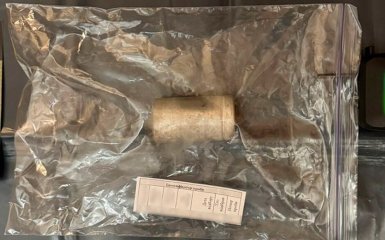
In March 2026, almost 400 cases of the Russians using special ammunition equipped with irritating chemicals were recorded.
Points of attention
- The Russian occupiers have used chemical weapons almost 400 times against the Armed Forces of Ukraine in March 2026, posing a serious threat to military personnel with severe irritations and health implications.
- The chemical munitions utilized, such as tear gas grenades and CN substances, aim to force Ukrainian soldiers out of cover and gain a tactical advantage, highlighting the ruthless tactics employed in the conflict.
The occupiers used chemical agents against the AFU 400 times in March
This was reported by the head of the communications department of the Support Forces Command of the Armed Forces of Ukraine, Lieutenant Colonel Maksym Kravchuk.
The enemy uses gas grenades of the K-51 and RG-Vo types, as well as improvised containers equipped with CS and CN substances. The main method of delivery is dropping from unmanned aerial vehicles. Most often, such means are used on positions of the Defense Forces of Ukraine in order to force personnel to leave cover and gain tactical advantage in the areas of concentration of main efforts.
The radiation, chemical, and biological protection units of the Ukrainian Armed Forces Support Forces record the use of hazardous chemical substances, and the selected samples are transferred for forensic research. The highest intensity of use was recorded in April 2025 — 894 cases.
According to the Chemical Weapons Convention, the use of such substances as a means of warfare is prohibited. CS and CN substances can be used by law enforcement agencies in peacetime exclusively for riot control under strict restrictions, but their use in combat conditions is illegal.
Although these substances are not lethal combat chemicals, they pose a danger:
cause severe irritation of the eyes and respiratory tract,
tearfulness,
cough,
suffocation,
disorientation,
temporary loss of combat capability.
In some cases, symptoms may indicate the use of other chemical irritants or mixtures of unknown composition.
Analysis of the dynamics indicates an increase in the intensity of the use of such substances in the spring and summer period. In 2024, the peak fell on May and June (over 700 and 600 cases, respectively), in 2025 — on May and June (over 800 and 700). Taking into account this trend, a further increase in the number of such attacks is predicted.
In this regard, military personnel should absolutely not neglect personal protective equipment, especially gas masks to protect the respiratory system.


