
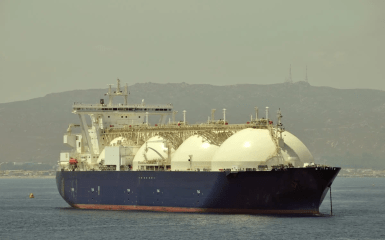
Iran will require shipping companies to pay in cryptocurrency for oil tankers to pass through the Strait of Hormuz as it seeks to maintain control of the key waterway during a two-week ceasefire.
Points of attention
- Iran is implementing a new policy that mandates shipping companies to pay in Bitcoin for oil tankers passing through the Strait of Hormuz for a two-week ceasefire period.
- The cryptocurrency payment requirement serves as a means for Iran to control the flow of goods through the strait and prevent unauthorized transfers of weapons during this period.
- Tankers are required to provide cargo information to Iranian authorities, who then assign a tariff paid in digital currency, with a set rate of $1 per barrel of oil.
Iran will demand payment from ships for passing through the Strait of Hormuz
This was reported by Hamid Hosseini, a representative of the Iranian Oil Exporters Union, in an interview with the Financial Times.
Iran needs to control what is imported and exported from the strait so that these two weeks are not used to transfer weapons.
Hosseini said that any tanker passing through the strait must send an email to authorities regarding its cargo, after which Iran will inform them of the amount of the fee, which is paid in digital currencies.
The tariff is $1 per barrel of oil, with empty tankers allowed to pass for free.
Once the email arrives and Iran completes its assessment, the vessels are given a few seconds to pay in Bitcoin, ensuring they cannot be tracked or confiscated due to sanctions.
On April 8, tankers in the Persian Gulf received warnings that they would be targeted for military strikes unless they first received approval from Iranian authorities.
An estimated 175 million barrels of crude oil and petroleum products are currently loaded onto 187 tankers in the Persian Gulf, which may now begin moving, depending on the situation in the strait.
Industry leaders estimate that between 300 and 400 vessels are waiting to leave the Persian Gulf as soon as it is safe to do so.
At the same time, Martin Kelly, head of the advisory service of the maritime intelligence group EOS Risk, said that it will not be possible to deal with the accumulated backlog of vessels waiting to leave in two weeks.
According to him, through a "fairly lengthy" process, about 10-15 ships will be able to pass through the strait each day, which is significantly fewer than the 135 ships before the war.
More on the topic
- Category
- Politics
- Publication date
- Додати до обраного


