
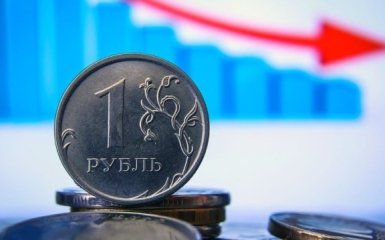
The Russian corporate sector, due to sanctions pressure and tax increases, entered 2026 in a state of managed collapse.
Points of attention
- In 2026, Russian companies suffered huge financial losses due to sanctions pressure and tax increases.
- Most of the largest companies in the Russian Federation have recorded a decline in revenue and profits, or even direct losses, and have been forced to abandon dividend payments.
Russian business loses profits in 2026
As noted in the SZR, "three-quarters of the largest companies in the Russian Federation recorded a decline in revenue and profit or direct losses in 2025. Dividends have turned into a luxury that the majority can no longer afford."
More than half of Russian companies, 53%, reported cash gaps in 2026. For 27% of them, this is a new reality. The oil and gas and raw materials sectors, wholesale and retail trade, and heavy industry have felt the crisis most painfully.
Gazprom, which until recently was a symbol of the Kremlin's financial power, will leave shareholders without payments for the second time in a row. The concern last paid dividends for the first half of 2022.
Following him, Rusal and Alrosa, two key companies in the aluminum and diamond sectors, refused to pay dividends. Rusal has not paid dividends to shareholders since the first half of 2022 and does not intend to do so for the first quarter of 2026.
Metallurgy is also struggling. NLMK and MMK, the largest steel producers in the Russian Federation, have recommended that shareholders forget about payments for 2025. NLMK last paid based on the results of 2023.
In the real estate market, developer Samolet reported a net loss of 2.3 billion rubles, compared to a profit of 8.2 billion a year earlier. Children's retailer Korablik, one of the largest in its segment, is teetering on the brink of bankruptcy, unable to withstand the debt burden and falling demand.
Rostelecom has laid off 20,000 employees. The confectionery holding United Confectioners has lost a quarter of its staff amid falling sales. Bork Retail's profits have fallen by 90% compared to 2024.
Volga Avtodor demonstrated one of the worst results: revenue fell by 96%, and debts to creditors reached 3 billion rubles, which is five times more than the company's entire annual revenue.
Shareholders of Magnit, Uralkali, Seligdar, Fix Price, Eurotrans, Unipro, Europlan, and the car-sharing service Whoosh, which received over 2.9 billion rubles in net losses, will also be left without dividends.
VK Holding, which is run by Vladimir Kiriyenko, the son of Deputy Head of the Russian Presidential Administration Sergei Kiriyenko, did not publish any profit and loss figures in its quarterly financial results presentation. This means that VK's net profit is likely to be negative again.


