
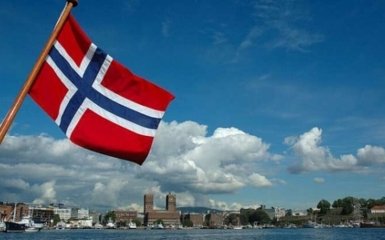
The "crazy world" shaped by US President Donald Trump and China is forcing Norway to reconsider its relations with the EU.
Points of attention
- Norway is reassessing its relationship with the EU due to the geopolitical uncertainties created by Donald Trump's policies and tensions with China.
- The debate on Norway joining the EU is fueled by concerns over how membership could impact crucial sectors like fishing and agriculture, which are vital for the country.
Norway is considering joining the EU
This was stated by the Minister of Foreign Affairs of Norway, Espen Barth Eide.
Norway, Europe's leading oil and gas producer, is part of the EU's single market but remains outside the bloc. Norwegians have twice opposed membership over fears that their fishing industry would be disadvantaged if it were governed by Brussels. Fish products are Norway's biggest export sector after fossil fuels.
"We said 'no' (in the referendum — ed.) in 1972 because of fish, and again in 1994, it was mainly because of fish. Fish and agriculture," Eide noted.
He acknowledged that the "safe world" that existed during the accession referendums had changed to a "crazy world," forcing Oslo to reconsider its relationship with the bloc.
This “crazy world,” given what is happening between China and the US, is forcing the EU to use tools from an arsenal that it has not been so active in before, he said, referring to trade policy and the customs union. “The very tools that we have decided not to join.”
The US tariff wars have highlighted Norway's awkward position as the country is part of the single market but has no say in trade negotiations with Washington, which are led by the European Commission.
Norway is a NATO member, but Trump's push to take control of Greenland, a semi-autonomous territory of Denmark, which is also a NATO member, has raised concerns in Oslo about the US security guarantees that have underpinned the continent's defences since World War II. Norway is also concerned about the future of the island of Svalbard, which is claimed by Russia.
The EU’s increased focus on defense and security issues following Russia’s full-scale invasion of Ukraine has made the bloc more attractive not only to Norway but also to other single market and NATO members such as Iceland, which Trump has repeatedly confused with Greenland, will hold a referendum in August on whether to resume accession talks.
Although influential figures such as Norwegian Prime Minister Jonas Gahr Støre and Eide support Norway joining the EU, the Norwegian Labor Party opposes calls for a new referendum, as opinion polls show that a majority of voters would still reject membership in the bloc.
Norway's oil and gas wealth has created a sense of independence in many people, Eide noted.
"There is a perception of economic independence that contributes to a sense of power. If there were a referendum tomorrow, I would vote yes ... but that doesn't mean that now is the time to demand a referendum," Eide concluded.
Now, he said, it is necessary to honestly acknowledge the shortcomings of our current system.
More on the topic
- Category
- Ukraine
- Publication date
- Додати до обраного


