
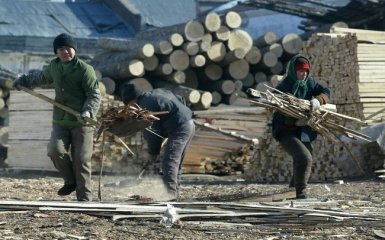
Russia has recently been turning into China's resource base, with local communities increasingly left out of the promised benefits.
Points of attention
- Russia is turning into China's resource base through raw material projects in the Far East and Siberia, leading to growing economic dependence.
- Local communities are not reaping the promised benefits from joint projects, with key positions being occupied by Chinese specialists instead of providing jobs to locals.
- The Zashulanskoye coal field in Transbaikalia is a prime example, where Russia has granted tax breaks to a joint venture with China to transport coal, impacting local environments and communities.
Russia is becoming a raw material appendage of China
Russia is sinking deeper into economic dependence on China. Raw material projects in the Far East and Siberia are turning the region into a resource base for Beijing, while local communities are increasingly left out of the promised benefits.
One key example is reportedly the Zashulanskoye coal field in Transbaikalia, which is being developed by a joint venture between Oleg Deripaska’s Russian En+ Group and China’s Shenhua Group.
The mine is designed to last a hundred years, and the Russian government has granted the company tax breaks. Starting in 2027, it plans to transport 5 million tons of coal to China each year — about 500 trucks per day.
For this purpose, a new route is being built, which will pass only 200 meters from village gardens, 1.6 km from the "Yamarovka" mineral water source and through forests with rare plant species. Despite promises, local jobs have not been provided: key positions are occupied by Chinese specialists.
Meanwhile, the company is cutting down cedar forests, and attempts to move the highway further from the protected area are being hampered by bureaucracy.
Dependence on China is also evident in tourism. The Irkutsk region is actively developing routes for Chinese visitors, businessmen from Beijing are buying up land and building hotels on the shores of Baikal, crowding out local entrepreneurs and increasingly openly calling the lake "theirs." It is estimated that up to 2 million Chinese citizens already live in the Far East.
Thus, even the symbol of Russia's natural wealth — Baikal — is gradually becoming part of Chinese economic interests, emphasizing the extent to which Moscow has lost control over its own resource regions.


