
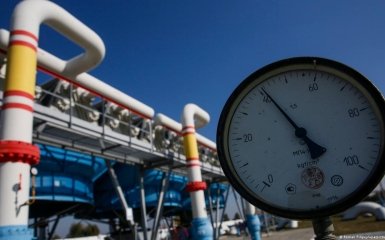
Despite three and a half years of full-scale war against Ukraine, European Union countries continue to pay Russia about 1 billion euros each month for oil and gas.
Points of attention
- European countries continue to pay Russia around 1 billion euros every month for oil and gas, despite the ongoing war with Ukraine, raising questions about financial losses and strategic dependencies.
- Russian oil and gas prices remain attractive to many European nations due to their low cost, leading to some countries hesitating to completely abandon Russian energy sources.
- Financial losses are a possibility for some European Union countries as they continue to rely on Russian energy resources, with Britain notably still importing Russian fuel through indirect channels.
Europe continues to buy Russian energy resources: what is known
Before the full-scale invasion of Ukraine in February 2022, the EU imported about 25 million tons of oil, gas, and coal from Russia every month.
Since then, volumes have fallen by nine-tenths. But purchases — mostly gas — still amounted to £965 million (€1.1 million) in August and more than £16.8 billion (€19 billion) last year.
After the embargo on Russian oil was imposed, Hungary and Slovakia were granted indefinite exemptions. They continue to import crude via the Druzhba pipeline and refuse to switch to the alternative Adria route from Croatia.
According to Luke Wickenden, an analyst at the Center for Research on Energy and Clean Air (CREA), the deciding factor is actually price: in 2024, Russian oil was about 20% cheaper than Croatian oil.
The bulk of the EU's imports from Russia is natural gas.
Its biggest buyers over the past year were:
France (6.7 million),
Hungary (4.4 million),
Belgium (3.8 million),
Spain (3.3 million),
Slovakia (1.8 million tons).
The French government has repeatedly stated that it is bound by long-term contracts that are difficult to terminate without decisions at the EU level.
The slowness in abandoning Russian fuel has led to the fact that since the beginning of the war, 17 of the 27 EU countries have paid the Kremlin more for energy resources than they have provided in military and financial assistance to Ukraine.
Turkey, a NATO ally, has imported £96 billion worth of Russian energy since March 2022. Large volumes also go to China and India, so Russia's total exports have barely fallen in four years, even despite lower prices.
In addition, oil and gas become harder to trace after refining. Britain was one of the first European countries to stop directly importing Russian oil and gas in 2022. However, since the invasion of Ukraine, the country has imported around £3 billion (€3.5 billion) worth of petroleum products, mostly jet fuel refined in India and Turkey from Russian oil, according to CREA.
Unlike other European countries, Britain has not yet closed this loophole, which allows it to effectively import Russian oil “second-hand.” According to CREA estimates, as a result, London has effectively financed the Kremlin’s budget to the tune of around £510 million (€590 million).
Furthermore, the British maritime and insurance sector plays a key role in the global trade in Russian fuel: since the beginning of the invasion, 76% of Russian LNG exports have been transported on vessels under British control or insured in Britain.
European governments may claim that there is an iron curtain between them and Russia and that their support for Ukraine is unequivocal. But in reality, the Russian military machine is still closely linked to the West through global supply chains.


