
Hostility from Russia will increase after the announcement of the intentions of Great Britain, France and Germany to deploy troops in Ukraine.
Points of attention
- British intelligence warns of Russia's aggressive expansion of 'hybrid warfare' against Europe in light of recent geopolitical developments.
- The Putin regime is suspected of orchestrating covert attacks, cybercrimes, economic warfare, and deploying 'non-state actors' to advance Russian interests in strategic sectors critical to Europe's defense.
- Increasing hostility from Russia is fueled by the deployment of troops in Ukraine and incidents involving the British Royal Navy, raising concerns about a new era of uncertainty in international relations.
Russia intensifies “hybrid warfare” against Europe
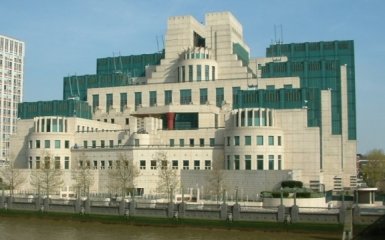
British intelligence agency MI6 is warning of a growing danger from Vladimir Putin's regime, which is provoking a new "era of uncertainty."
As strategic communications advisor Chris Blackhurst, who was previously the editor of The Independent, writes in a column for The Independent, hostility from Russia will only grow. Especially after the declaration of intentions of the UK, France and Germany to deploy troops in Ukraine, as well as after the detention of a tanker of the Russian "shadow fleet" near the British Isles with the participation of the Royal Navy.
Intelligence has warned of covert attacks in the "gray zone." And this, according to the author, is not only sabotage, assassinations, hacking, cybercrime and drone incidents. To these, Russia can add economic warfare, the players of which will be "non-state actors." These are not Russian diplomats or organizations officially connected to the Russian state, but "private individuals, organizations, movements and companies that secretly act in the interests of Russia."
For example, Austrian-German financier Jan Marsalek, who was the COO of German payment processing company Wirecard, went bankrupt in 2020 after announcing that €1.9 billion it was allegedly holding in cash did not actually exist.
For nearly a decade before the company went bankrupt, Marsalek worked for the Russian intelligence agency, the GRU. His position at Wirecard gave him access to data and resources useful to the Russians. He used his position to develop pro-Russian ties in Libya and encourage a flow of migrants to Europe that would cause social and financial harm—all of which played into Moscow’s hands.
After the Wirecard collapse and the exposure, Marsalek fled to Russia. In late 2023, Marsalek was again named as the coordinator of a Bulgarian spy ring operating in the UK.
Another example is petty criminal Dylan Earle, the ringleader of the arson attack on a warehouse in east London that was storing aid to Ukraine in March 2024. He was recruited online by representatives of Russian mercenaries from Wagner.
Even more sophisticated and difficult to uncover are Russians or non-Russian entities operating in the commercial sphere, in strategic sectors critical to Europe’s defense and infrastructure, such as defense and energy, and acting in Russia’s interests, often under orders from the GRU or other Kremlin services. Security sources say Moscow finds these actors useful because there is a certain level of separation: the ability to deny is fundamental to the strategy.
The publication also cited the case of Russian citizen Oleksandr Kirzhnev as an example. He is wanted by the Supreme Anti-Corruption Court of Ukraine, accused in absentia of organizing fraud against Ukraine by using a fake American company to fulfill an order for ammunition.
Ukrainian state-owned company Artem placed a multi-million dollar order for 152mm and 155mm shells with a Florida supplier and made an advance payment. The problem was that the Florida company was unable to fulfill the order:
By diverting precious Ukrainian money, taking up their time and effort, and making them think that desperately needed military supplies were arriving when they weren’t, Kirzhnev’s actions — whether they were directed or not — exemplify Russia’s “gray zone” goals: disavowed private sector activity that brings the Kremlin closer to its strategic goals by sowing uncertainty along the way.
However, attempts to deny Russia's involvement in such transactions are not always successful. According to the author, in October 2022, Yuri Orekhov was one of five Russian citizens indicted in New York in a global procurement scam. Orekhov and his companies were subsequently added to the US Treasury Department's sanctions list.
Blackhurst noted the serious scale of Russia's "gray zone" dark web and the serious potential damage Moscow can inflict on vulnerable targets by using deniers.


