
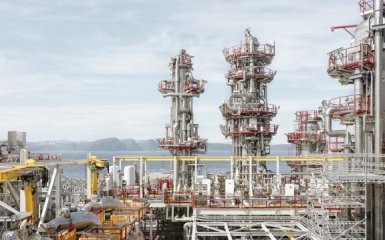
Europe is starting to implement a ban on the import of Russian liquefied natural gas on a short-term basis from April 25.
Points of attention
- The European Union is implementing a ban on the import of Russian liquefied natural gas on a short-term basis starting April 25 to reduce dependence on Russia.
- The ban could result in a significant reduction of Russian LNG supplies by 2.8–3.5 million tons per year, accounting for about 3% of total LNG imports in 2025.
EU bans Russian LNG imports in the short term
Starting tomorrow, the European Union will ban the purchase of Russian LNG on a short-term basis, i.e. on the spot market. Deliveries under long-term contracts could continue until the end of the year.
The EU gets about 12% of its gas from Russia, some of which comes through pipelines. A spot market ban could cut Russian LNG supplies by 2.8 to 3.5 million tonnes a year, according to estimates by Wood Mackenzie Ltd. and Energy Aspects Ltd.
This represents about 3% of the bloc's total LNG imports in 2025.
The supply cuts come at a time when the base price of gas in the region has already jumped by about 40% due to the conflict in the Middle East.
Europe currently has plenty of gas, thanks in part to voluntary cuts in global demand. The region has been slow to start pumping gas into underground storage, while consumers in Asia, who could compete for supplies, have decided to limit their consumption in response to the blockade of the Strait of Hormuz.
However, Europe will have to buy more fuel in the coming months to replenish supplies for next winter.
EU officials have repeatedly said they should not return to Europe's dependence on Russian energy imports, which was sharply reduced after Moscow's full-scale invasion of Ukraine, while also consistently urging member states to make filling storage a priority.
If the situation worsens, the European Commission has the authority to declare a state of emergency and temporarily renew permission to buy Russian fuel on the spot market, say LNG analysts at Energy Aspects.
Some of Europe's largest energy suppliers will be forced to terminate their contracts for Russian LNG supplies next year, including France's TotalEnergies SE, Spain's Naturgy Energy Group SA and Germany's SEFE Securing Energy for Europe GmbH.
But Europe's ban won't eliminate Russian LNG from the global market. Russia's Novatek, the major shareholder in the Yamal production facility in the Arctic that currently supplies gas to Europe, is already ramping up its sales efforts across Asia.


