
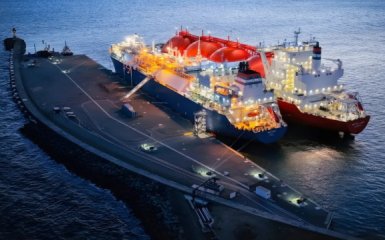
Natural gas prices in Europe have risen sharply after Iran launched a missile strike on the world's largest liquefied natural gas plant in Qatar on March 18.
Points of attention
- Iran's missile strike on Qatar's LNG plant has led to a 35% increase in gas prices in Europe.
- The attacks on Qatar's gas facilities could result in a prolonged disruption of natural gas supplies, impacting the global supply balance.
- Analysts predict a significant impact on the LNG industry, similar to the attack on Nord Stream, with potential long-term consequences for gas prices worldwide.
Gas prices in Europe have risen sharply
Benchmark futures jumped 35% on March 19, sending prices more than double their pre-war levels as the market braces for the fallout from a strike on a critical LNG hub that provided about a fifth of global supplies.
QatarEnergy reported that several LNG infrastructure facilities in the city of Ras Laffan were hit by rockets, which "caused significant fires and considerable subsequent damage."
The Ras Laffan plant closed in early March after an Iranian drone attack, the first disruption to supplies in its three decades of operation. But the latest strikes threaten to keep gas prices high in Europe and Asia for much longer.
Analysts say this could be a watershed moment for the LNG industry, similar to the attack on Nord Stream, or worse. There is no sign that Qatar will be able to restore its infrastructure anytime soon. LNG supplies from the country could be cut off for months, or in the worst case, years.
Gas facilities in Habshan, Abu Dhabi, were also shut down after debris from a downed missile fell on them. US President Donald Trump said Washington would take action if LNG facilities in Qatar were attacked again.
Details on the extent of the damage and the timing of repairs are still unknown. While Asian countries buy most of the LNG coming from the Middle East, any prolonged disruption to supplies would reduce the global supply balance, sending prices soaring worldwide.
For Europe in particular, the escalation of the conflict comes at a difficult time as the region emerges from winter with depleted storage tanks, meaning it will have to buy more LNG this summer to replenish supplies, competing with Asian buyers for fewer available resources.


