
NATO war games demonstrated that only coordinated and rapid action by large countries such as Germany and Poland can protect the Alliance's eastern flank. The consequences of these war games were analyzed by former US Army officer, Lieutenant General Ben Hodges.
Points of attention
- Coordinated and rapid action by large NATO countries like Germany and Poland is crucial to protect the Alliance's eastern flank.
- Supporting Ukraine's victory over Russia is identified as a key strategy to safeguard Europe from aggression.
NATO air power will stop Russia — Hodges
He recalled that a simulated scenario showed that Russia, using only 15,000 soldiers, could successfully seize important NATO territory without the need for large numbers of troops and without massive casualties.
Hodges writes that the end result of the game led to "the destruction of trust in NATO and the loss of the Baltic states, which, cut off from their neighbors' borders, fell back under Russian domination."
According to Hodges, the war game taught several valuable lessons to NATO countries. The first is the belief that the best way to protect Europe is to ensure Ukraine's victory over Russia.
Russian forces greatly outnumbered Ukrainian forces before the 2022 invasion, but Ukraine stopped the Russians. Actually helping Ukraine defeat Russia would show Putin that he could not hope to defeat the much more powerful NATO forces.

Ben Hodges
Military expert
The general also writes that NATO's failure to respond to hybrid operations over the past few years has emboldened the Russians and demonstrated NATO's vulnerabilities, including "a collective unwillingness to respond appropriately to Russian provocations."
We need to develop a sense of urgency in building our cyber defenses of transportation networks, energy networks, and financial networks. We also need to ensure that our own offensive cyber capabilities are ready to be used and have a disruptive effect.
He noted that air power was not sufficiently taken into account during the war games.
Indecisive governments are usually much more willing to deploy air power than ground troops, and NATO air power is superior to Russia's.
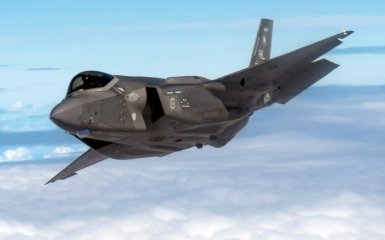
He added that European NATO countries have more than 150 fifth-generation F-35 fighters. And Russia has only a few Su-57 aircraft, and these are not real 5G aircraft. In addition, NATO countries have powerful military aircraft with radar stations, and Russia "may completely lose this vital opportunity to wage air warfare due to the efforts of Ukraine."
The game scenario emphasized the need to deter Russia by acting elsewhere if Russia advances in the Suwalki Corridor. Such a move would mean that offensive cyberattacks would cripple Russia’s oil and gas infrastructure and all Russian use of the Baltic Sea would be halted. This would cut off the flow of illicit oil by “shadow fleet” tankers to China and India, which would have a devastating impact on the Russian economy.
He also wrote that such a move by Russia should be deterred by making the opening of the corridor to Kaliningrad pointless by neutralizing Russian bases and missiles there with the help of aviation and long-range precision strikes.
And in addition, NATO should make it clear that the Kola Peninsula will be attacked immediately with "the use of air power, long-range strikes and cyberattacks that neutralize Russian submarine bases there."
He admitted that the German Bundeswehr forces in Lithuania, combined with their Lithuanian allies, would perform better than the scenario showed. However, in his opinion, "the Baltic countries should be prepared, in the worst case, to fight without additional reinforcements for two weeks."
That is how long he believes it will take to assemble enough real ground capabilities to intervene. He believes these countries need a comprehensive defense concept, similar to Finland's, in which their societies can quickly go to war if necessary.
Hodges recalled that after the full-scale Russian invasion of Ukraine, Sweden and Finland joined NATO. This gave NATO the opportunity to make the Baltic Sea an internal sea of NATO, and the Baltic states gained "depth" that did not exist before.
For example, Sweden can support Latvia. In this context, he noted the strengthening of the island of Gotland by Sweden. Similar processes, he believes, should take place on Spitsbergen by the Norwegians and the Faroe Islands by the Danish side.
We must also assume that Russia will launch air, missile, or drone attacks on all NATO seaports and airports in any attack of the magnitude that Ukrainians face every night. We are not yet prepared for that. NATO air defenses are potentially powerful enough to suppress or repel such attacks, but we do not train for such operations well enough and do not have the aircraft and weapons reserves that we should.
He added that Europe should practice a similar attack, taking into account the scenario that the US will not take defensive measures or will hesitate to do so.


