
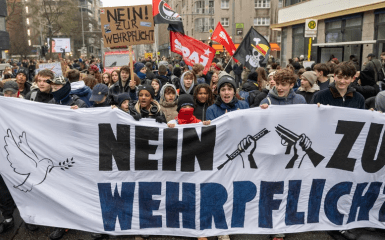
In Germany, young people have protested against the new law on military conscription, which was passed by the German parliament on December 5.
Points of attention
- Young people in Germany are actively protesting against the new law on military conscription, demanding more funds be directed to education.
- The new law includes provisions for an increase in the number of military personnel and mandatory medical examinations for young men, which has sparked opposition among the youth.
- The reform is influenced by new NATO requirements for personnel numbers and aims to significantly increase the size of the German Bundeswehr by 2035.
Germany's youth do not want to fight for their country: details
On December 5, deputies passed a bill on the reform of conscription into the German Armed Forces. In order for the reform to come into effect on January 1, 2026, as planned, it must be approved by the Bundesrat, whose last meeting this year will be on December 19.
The initiative of German Defense Minister Boris Pistorius envisages the return of a mandatory medical examination for age groups. From July 2027, all German young men, starting with those born in 2008, will have to undergo it. This procedure will affect approximately 300,000 young people each year.
The reform is being influenced by new NATO requirements for personnel numbers amid the growing threat from Russia. According to these requirements, Germany must be able to deploy around 460,000 troops in the event of a crisis or war by 2035.
Pistorius plans to increase the size of the Bundeswehr from the current 183,000 soldiers and officers to around 260,000, and expand the reserve to 200,000 people.
Even earlier — starting in 2026 — young men who have reached the age of 18 must fill out a questionnaire in which they will have to answer questions about their physical fitness and willingness to join the army.
Girls can also fill it out and report their readiness, but only at their personal request, since, according to the German constitution, only men can be required to serve in the military.
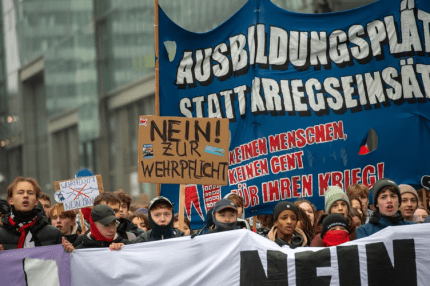
On the day the bill was passed, protests took place in Berlin, Magdeburg, Hamburg, Brandenburg, and other cities across the country.
They were called to these actions by the initiative "School Strike Against Conscription" (Schulstreik gegen Wehrpflicht). Among other things, the young people are demanding that funds be directed to education, not the army.


