
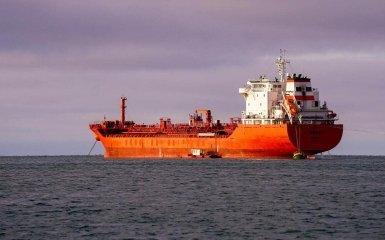
The Islamic Revolutionary Guard Corps announced the closure of the Strait of Hormuz to maritime traffic and warned that ships that attempt to violate the ban will face a harsh response.
Points of attention
- Iran's IRGC has officially declared the closure of the vital Strait of Hormuz to maritime traffic, signaling heightened tensions in the region.
- Ships attempting to violate the ban on passage through the strait, particularly those associated with the Israeli-American alliance, will face severe consequences as warned by the IRGC.
The IRGC promises to react harshly to traffic through the Omuz Strait
This is stated in a statement by the Public Relations Department of the Islamic Revolutionary Guard Corps (IRGC).
Iran's Islamic Revolutionary Guard Corps has announced the closure of the Strait of Hormuz to maritime traffic and warned that ships that attempt to violate the ban will face a harsh response.
The IRGC statement notes that the passage of all vessels heading to or leaving ports associated with the "Israeli-American alliance" is prohibited, regardless of the route.
The statement said that this morning, three container ships from different countries attempted to pass through the strait through authorized corridors. However, as a result of intervention and warnings from the Naval Forces of the Guard Corps, these ships were forced to change course and return.
The Islamic Revolutionary Guard Corps also stated that the US administration's claims that the "Strait of Hormuz is open" are not true, emphasizing that the strait is actually closed.
At the end of the statement, it is emphasized that anyone who tries to use the strait in violation of the ban will receive a "harsh response."
Iran previously told the UN that "non-hostile" ships could pass through the Strait of Hormuz, provided they coordinated with the country's authorities. According to the International Maritime Organization (IMO), about 2,000 ships and 20,000 sailors are stuck in the Strait of Hormuz due to the war in the Middle East.


