
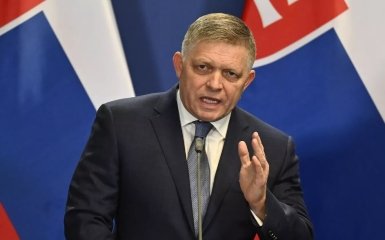
The Slovak government is trying to push through parliament amendments to legislation that are effectively equivalent in content to the Russian law on "foreign agents" and its Georgian counterpart.
Points of attention
- The Slovak government is proposing a law on 'foreign agents' that echoes the legislation seen in Russia, sparking mass protests across the country.
- The draft law aims to label NGOs and independent media outlets receiving foreign funding as 'foreign agents', a move criticized by European authorities and human rights organizations.
- Slovak Prime Minister Robert Fico's push for the law represents an attempt to assert control over civil society, but he denies mirroring Russian tactics for stifling dissent.
Fico wants to pass his own law on "foreign agents"
Thousands of Slovaks marched against these legislative changes. Street protests took place in Bratislava, Košice and other cities.
Slovak Prime Minister Robert Fico has long sought to subdue NGOs and independent media outlets, promising in 2023 to introduce a law that would designate them as foreign agents if they receive funding from abroad.
As of today, the relevant amendment to the law is in its second reading in parliament. A vote on it is scheduled to take place next week.
The European Commission recently warned the Slovak government that the law was unacceptable and that Brussels would take retaliatory measures. Numerous non-governmental and human rights organizations, including Amnesty International, have also condemned the bill.
Lucia Stasselova of the Peace for Ukraine initiative, which is organizing protests across the country, called the law "a tool for the systematic dismantling of civil society."
This law is copied from Russia, where similar legislation is used to destroy independent organizations, imprison opposition figures, silence the media, and repress. We will not allow Slovakia to follow this path.
Prime Minister Fico himself said that he respects people's right to protest, but denied that he was copying the Russian experience of suppressing dissent.
The draft law on NGOs has nothing to do with Russian, American or Israeli legislation. They (opposition-minded citizens — ed.) have run out of things to protest against, so now they are just making up another lie.

Robert Fico
Prime Minister of Slovakia
As Politico notes, Hungary passed a similar law in 2017, but was forced to repeal it in 2023 after the Court of Justice of the European Union ruled it illegal.


