
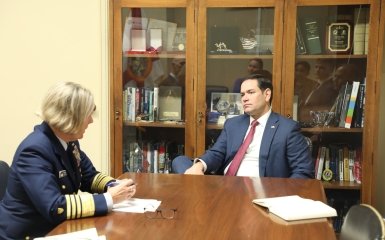
US Secretary of State Marco Rubio and other foreign ministers of the G7 countries publicly exchanged sharp remarks regarding the Russian-Ukrainian war and the conflict in the Middle East.
Points of attention
- Tensions arose as Rubio argued that while the US is frequently requested to assist in conflicts, allies are hesitant to reciprocate when the US seeks support.
- The differing views on involvement in these conflicts reveal ongoing tensions and disagreements among Western diplomats.
Rubio is furious that Trump's requests remain unanswered
According to journalists, this time Western diplomats fell out over the reluctance of European countries to respond to the call of US President Donald Trump.
The head of the White House has repeatedly asked allies to help him unblock the Strait of Hormuz, but so far no one has wanted to do so.
Moreover, official Brussels generally does not support the US in the operation against Iran.
The United States is constantly being asked for help in the war,” Rubio complained, referring to Ukraine. “But when the United States itself needed help, it didn’t get positive responses.”
Responding to the reproaches of the head of the State Department, European leaders stated that they were ready to join the defense of the Strait of Hormuz only after the cessation of hostilities.
A statement on this occasion was made by the spokesman for the French Foreign Ministry, Pascal Confavre.
According to him, planning for an operation to protect the Strait of Hormuz is in full swing.
"This will happen after the bombing is over. Only for defensive purposes. We are preparing such a mission with all willing partners. But we have made it very clear that this war is not our war, and we do not want to get involved in it," he stressed.


