
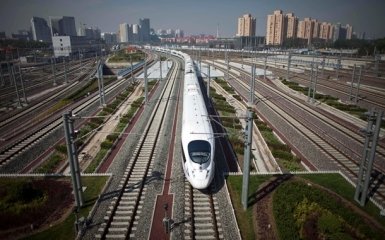
Russia and China signed an agreement on May 20 to jointly build a new railway line across their common border.
Points of attention
- Russia and China have signed an agreement to construct a new railway line on their border, which is expected to significantly boost trade capacity by 2030.
- The project involves building a second railway line with Chinese standard gauge between Zabaykalsky in the Russian Far East and Manchuria in Inner Mongolia.
Putin and Xi sign agreement to build new railway line
Officials signed the agreement in Beijing during a ceremony attended by Chinese and Russian leaders Xi Jinping and Vladimir Putin.
The project involves the construction of a second railway line with Chinese standard gauge on the border between Zabaykalsky in the Russian Far East and Manchuria in the Chinese region of Inner Mongolia, the Russian Ministry of Transport reported.
In March, the Russian agency reported expectations that the new line would increase annual capacity by 11 million tons by 2030, or almost 50 additional pairs of freight trains per day.
The Zabaykalsk–Manchuria crossing is the busiest rail checkpoint on the Russia-China border and an important trade artery. Currently, cargo has to be transferred from Russian cars with a wider gauge of 1,520 millimeters to the Chinese system with a standard gauge of 1,435 millimeters.
Trade between the two countries has increased by more than 50% to more than $200 billion a year since Russia's full-scale invasion of Ukraine, which triggered Western sanctions that deepened Moscow's dependence on China.
However, trade between the two countries has been limited for many years by bottlenecks on the railway.
Moscow has used its rail network to redirect much of its exports of raw materials, such as coal and aluminum, to China as the European Union has imposed restrictions on imports from Russia. Russia has also increased its agricultural exports to China, particularly by land.
Both countries have previously said they aim to increase trade by developing joint agricultural infrastructure projects in the Russian Far East, including grain terminals, food processing plants and supply routes to China.
Russian exports of animal feed to China may also receive a boost after officials from both countries signed an agreement on veterinary and sanitary requirements for these products during Putin's visit to the Chinese capital.


