
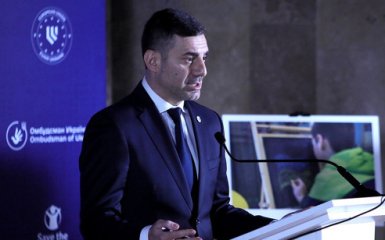
The Verkhovna Rada Commissioner for Human Rights, Dmytro Lubinets, stated that the Russian Federation uses 695 forms of various torture against Ukrainian prisoners of war, which include physical and psychological torture, and sexual violence.
Points of attention
- Russia is reported to be using 695 forms of torture against Ukrainian prisoners of war, which include physical and psychological torture, sexual violence, and inhumane detention conditions.
- The inadequate conditions of detention and torture of Ukrainian prisoners are systematic, involving unsanitary conditions, starvation coercion, electrocution, and physical beatings.
Russia tortures Ukrainian prisoners of war while the world reacts weakly to this lawlessness — Lubinets
He said this during the presentation of the project "Made in Russia. Taken prisoner."
Today, in this project ("Made in Russia" — ed.), we officially record that, according to our data, the Russian Federation uses 695 forms of various tortures, which include physical and psychological torture, sexual violence. Prisoners of war are strangled, beaten, electrocuted, poisoned with dogs, sometimes forced to stand in one place for 18 hours, and as soon as you start to squat, they immediately start physically beating you.

Dmytro Lubinets
Ombudsman of Ukraine
The Ombudsman noted that inadequate conditions of detention and torture are systemic in relation to Ukrainian prisoners of war. Among other things, this concerns unsanitary conditions, starvation as a method of coercion. 860 facts of inadequate conditions of detention were also recorded.
One type of torture is the so-called "barbering", when during shaving not only hair is specially cut off, but also pieces of skin from the scalp. If a person starts screaming, they are immediately physically beaten again and electroshocked.
The Ombudsman informed that data from international partners record 29 places of detention, 18 in the territory of the Russian Federation, 11 in the territory of temporarily occupied Ukraine.
At the same time, according to him, the intelligence agencies of Ukraine have verified 186 places of reception of Ukrainian prisoners of war and civilian hostages, which cover the entire territory of the Russian Federation and the TOT. In addition, there are places of detention of prisoners in Siberia. According to Lubinets, the conditions of detention in these places are almost the same, not adapted for the civilized detention of prisoners.
The Commissioner emphasized that the weak world response to the recorded systematic torture sends a signal to Russia that it can continue to do so with impunity.
As the Ombudsman of Ukraine, I am now once again publicly declaring: there is no international system for protecting human rights for a country that tortures prisoners of war, civilian hostages, deports Ukrainian children, and the name of this country is the Russian Federation. That's it, it doesn't exist. None of the international instruments work there. And we must talk about this today and look for additional opportunities to influence the Russian Federation.
Lubinets also criticized the work of the Red Cross.
Are there representatives of the International Committee of the Red Cross? We sent them a separate invitation. They are not in the hall. They do not want to hear again that there is a problem with the implementation of their mandate. What are you doing in addition to change this position? Perhaps the negotiations may bring a result, but definitely not the one that you and I expect. Regarding the prisoners of war from the defenders of Mariupol. Olenivka — everyone knows that the Russians did it. 53 guys, verified by the ICRC as prisoners of war, were killed, more than 130 were wounded. Where is the reaction? None. And there will be no reaction if we all do not understand that we must now put pressure, demand and do everything to bring every representative of the Russian Federation to justice.


