
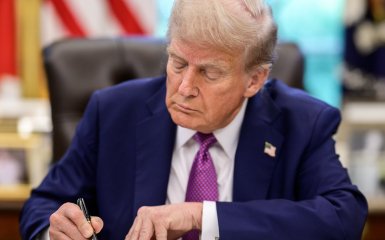
During the NATO summit in The Hague on June 25, Donald Trump changed his rhetoric for the first time and expressed strong support for the alliance and its defense mission.
Points of attention
- During the recent NATO summit, Donald Trump made an unexpected promise not to attack Russia and expressed strong support for the alliance's defense mission.
- Leaders of 32 NATO countries agreed to more than double military spending targets to 5% of GDP by 2035, amidst pressures from the United States.
- Experts highlight the shift in Trump's rhetoric towards NATO and allies, as well as the impact of increased military spending on security measures in response to the Russian threat.
Trump promised partners that Russia would not attack NATO
According to three European officials familiar with the discussions, Trump began the main NATO session with positive words about defense spending and vowed that Russia would never attack NATO as long as he remained president.
Other leaders, for their part, praised Trump's efforts to increase European defense spending.
On his way to the summit in The Hague, Donald Trump expressed skepticism about Article 5 of the NATO treaty, questioning the concept of collective defense.
The very next day, he pledged "full support" for the alliance, noting that the US would be with its allies "to the end," whatever that meant.
The US president stressed that America is "here to help" its European partners, a shift in rhetoric that contrasted with his previous threats to leave allies defenseless.
Leaders of NATO's 32 nations have agreed to more than double military spending targets, in line with Trump's long-standing demands. The alliance's spending is now set to rise from 2% to 5% of GDP by 2035, taking into account "creative calculations."
The declaration mentions a flexible interpretation: up to 1.5% can be counted towards infrastructure and aid to Ukraine. Many allies fear budgetary burdens, but under US pressure they have accepted new targets with a wide "time margin."
The heads of state specifically praised Trump behind closed doors, praising his “audacity” in striking Iran and promising to “Make NATO Great Again.” Secretary-General Mark Rutte even called him “daddy.”
The president spent the night at the royal palace and exchanged personal messages with leaders. Experts say that such "flattery" became a tool for obtaining favorable decisions from the American president.
French President Emmanuel Macron has said the high spending is driven by the Russian threat, not a desire to please the United States. Spain and some other countries have tried to soften the new targets, fearing they could overburden their budgets.
Experts warn: the agreements are still declarative, and actual implementation has been postponed until 2035. The allies are using advanced accounting methods to buy time and adapt plans to their own capabilities.
Recall that, according to military intelligence, Putin has been preparing to attack NATO countries for five years.


