

During the night of February 13-14, Russian occupiers carried out attacks on various regions of Ukraine. As a result of enemy strikes, a woman was killed in Odessa, and two civilians were injured in the Kyiv region.
Points of attention
- The psychologist from the State Emergency Service is offering necessary support to those affected by the attacks.
- Efforts are being made to provide medical care to the injured individuals and manage the damaged residential buildings caused by the Russian attacks.
Russia attacked Ukraine again — what are the consequences?
According to the State Emergency Service of Ukraine, a residential building in Odessa was damaged as a result of a Russian drone strike.
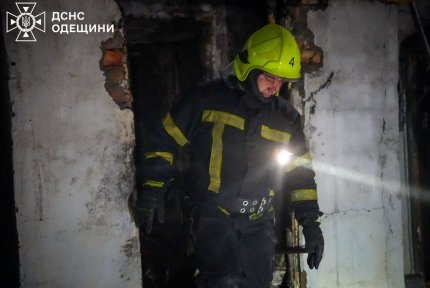
"Unfortunately, an elderly woman died during the attack. The glazing of nearby outbuildings and private buildings was damaged," the official statement said.
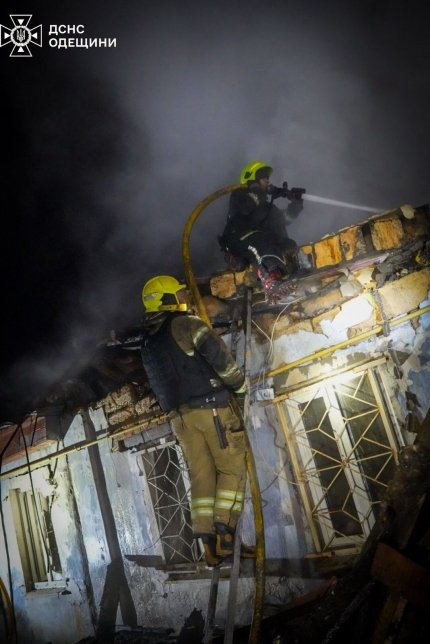
In addition, it is noted that a psychologist from the State Emergency Service of Ukraine worked at the scene, providing necessary support to people who found themselves in the epicenter of the disaster and lost a loved one.
According to the latest data, two people were injured in a Russian attack in the Vyshhorod district of the Kyiv region.
This was announced by the head of the Kyiv OVA Mykola Kalashnyk.
According to him, the man suffered multiple shrapnel wounds to his upper limbs, face, and neck, and the woman suffered a closed fracture of her forearm bones.
Kalashnik officially confirmed that both victims were hospitalized in a local hospital and are receiving all necessary medical care.
Also, a fire broke out in a private residential building due to the Russian attack — the fire was quickly extinguished by the State Emergency Service employees.


