
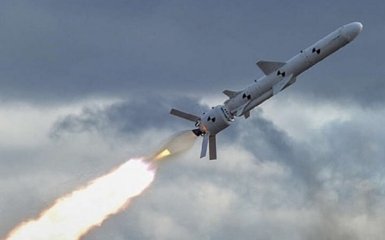
All the Kh-101 missiles with which the enemy attacked the Kyiv region on the night of May 14 were from a single batch, manufactured approximately in the second quarter of 2026 using Western components.
Points of attention
- Analysis of the recent Russian strike on Kyiv on May 14 reveals that all Kh-101 missiles used had Western components, raising concerns about the effectiveness of sanctions.
- The use of fresh batches of missiles with Western components highlights the continuous flow of foreign components needed by the enemy, despite efforts to block supplies.
All Х-101 missiles used by the Russia to attack Kyiv have Western components
This was confirmed during an online meeting with journalists by the Presidential Commissioner for Sanctions Policy, Vladyslav Vlasyuk.
According to the official, towards the end of the day on May 14, it became clear that all of the Kh-101 missiles launched that night over the Kyiv region came from the same batch.
One hit a residential building on the left bank of Kyiv, killing 25 people, another hit a gas station in the DVRZ area, and a third hit Bila Tserkva, where it probably missed. All of these are products of the same series, approximately from the second quarter of 2026.
Analyzing the situation, from a technical point of view, several important conclusions can be drawn. First, the trend is confirmed: what is used for attacks on Ukraine, the Russians take straight from the assembly line. Therefore, it is worth assessing statements about possible short-term "truces" differently: the enemy is simply using this time to accumulate weapons.
Secondly, it is worrying that fresh batches of missiles contain a significant proportion of Western components. A separate issue is the date of production of these components. I think we will see the end of 2025 on the markings, and some may be manufactured as early as 2026. This means that all efforts aimed at blocking supplies and stopping the flow of foreign components needed by the enemy are still insufficient.
According to him, the relevant materials were transferred to international partners (once again) on May 14. The priority topic of negotiations with them remains preventing the aggressor from circumventing sanctions.
At the same time, there are positive developments. Among the materials are reports from one of the US law enforcement agencies. Over the past year, more than ten cases have been recorded when it was possible to identify and stop the supply channels of components to the Russian Federation worth millions of dollars.
He also mentioned the story with NVIDIA. A year ago, the Russian side began actively integrating artificial vision modules into drones, in particular into some modifications of Shahed-type devices. However, this technology did not become widespread.
This is probably due to the fact that during the same period, according to our data, American intelligence services were able to block some of the critical supplies. This is confirmed by the materials we have seen, including photos of seized shipments and logistics containers.
But there are also opposite examples. For example, we are talking about the analysis of components, among the manufacturers of which is one of the largest European companies producing microelectronics, STMicroelectronics (Switzerland). Ukraine is trying to "reach out" to this manufacturer. In particular, through our embassy in Switzerland, the company transferred approximately 50 serial numbers of components manufactured by it, which were discovered this year.
Unfortunately, we hear from STM the position that these are “small components” that supposedly do not pose a significant problem, or that they are not produced in Switzerland, and therefore the impact is limited. This approach differs significantly from the reaction of other partners and is of concern, so work in this area continues separately and more intensively.
As for other manufacturers, the process, according to him, is more structured. A mechanism has been worked out for the transfer of detected samples for analysis by manufacturers.
Components, in particular, are regularly transferred to partners in Ireland, Germany, the UK and the USA for further technical research.


