
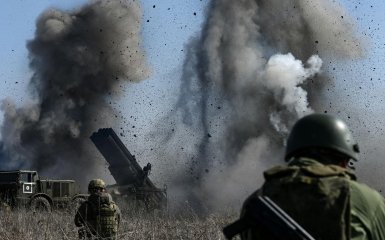
The Financial Times draws attention to the fact that the aggressor country Russia has intensified its summer offensive in Ukraine. This time, it has bet on new technologies, breakthroughs and plans to surround Ukrainian defense forces.
Points of attention
- The utilization of new technologies and strategic advancements by Russia in the ongoing offensive highlights the evolving nature of modern warfare tactics.
- The challenges faced by the Armed Forces of Ukraine in countering the enemy's advancements underscore the complexity of the current geopolitical situation in the region.
What is the Russian army up to this time?
In recent months, Russian invaders have continued to advance in various regions of Ukraine.
What is important to understand is that the enemy's key breakthroughs took place in the Sumy region, where about 200 km² of territory was captured.
Moreover, for the first time since the start of the full-scale invasion, the Russian army reached the border of the Dnipropetrovsk region.
As journalists note, one of Russia's main trump cards during this offensive was fiber-optically controlled attack drones.
Their peculiarity is that they do not react to Ukrainian electronic warfare equipment, because they do not transmit a signal via radio waves.
A Ukrainian drone unit commander, speaking on condition of anonymity, commented on this matter:
At the moment you're lucky if you drive five kilometers from the front line and your car still works. That's how they work, everything else is the exception now.
We also cannot ignore the fact that Russian drones are striking logistical targets 30–40 km deep into Ukrainian territory.
They were the ones who carried out attacks on Ukrainian trucks, and also destroyed warehouses on the road between Kramatorsk and Dobropillya.
Commanders at the front, particularly near Siversk, banned any daytime traffic, allowing it only "during the gray hours of the day and in the dark."


