
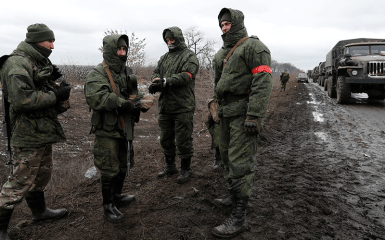
Ants Kiviselg, head of the Estonian Defense Forces Intelligence Center, said that despite Russia's more active attacks on Ukraine's energy infrastructure, the advance of its military in early 2026 was slower than in late 2025.
Points of attention
- Estonian intelligence reports a slowdown in the Russian army's advance on the Ukrainian front in early 2026.
- Despite ongoing attacks on Ukraine's energy infrastructure, the intensity of military operations has decreased.
- Russian forces are still actively engaged in fighting in certain areas of Ukraine while showing a slower offensive pace compared to late 2025.
Russia has slowed down its offensive in Ukraine — Estonian intelligence
Kiviselg said that last week the intensity of military operations on the front line decreased slightly compared to the previous week, but the Russian Federation continued to attack Ukraine's energy infrastructure.
Last week, there were an average of 170 combat clashes per day, which is slightly less than the previous week, when there were about 200. At the same time, the advance of Russian Federation units at the beginning of this year was slower than in November and December of last year.
According to the head of the intelligence center of the Estonian Defense Forces, the main focus of the Russian Federation has not changed: the most active battles continued in the directions of Pokrovsk and Myrnograd, as well as in the directions of Zaporizhia and Hulyaipol.
Russian units managed to advance in the northern part of the Kharkiv region, in the directions of Sloviansk, Kostyantynivka, and Pokrovsk, as well as in the western part of the Zaporizhia region.
According to Kiviselg, over the past week, the Ukrainian Armed Forces have advanced in the Kupyansk district.


