
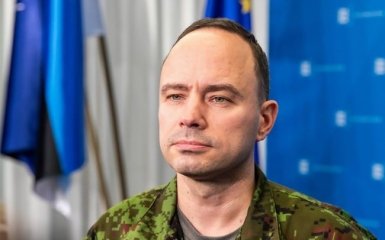
Ants Kiviselg, head of the Estonian Defense Forces Intelligence Center, said that there is currently no intelligence indicating that Russia is preparing to attack the Baltic countries.
Points of attention
- According to Estonian intelligence, there is currently no evidence suggesting that Russia is preparing to attack the Baltic states.
- The analysis of the threat of aggression from Russia involves considering various factors like the state of Russian armed forces, political intentions, and the global context.
Estonian intelligence assessed the risks of Russia opening a new front in the Baltics
According to Kiviselga, analyzing the threat of aggression is a complex process. It requires simultaneous consideration of the state of the Russian armed forces, the political intentions of the Russian government, and the overall international context.
He noted that globally, the aggressor country did not achieve its strategic goals in the war against Ukraine. Even those tasks that the occupiers managed to accomplish were implemented with a significant lag from the initial plan.
Last week, Ukrainian President Volodymyr Zelensky reported that Russia was restricting access to the internet in order to carry out mobilization, and the gathered forces could potentially be directed against the Baltic states.
However, Estonian intelligence has a different view of the situation: the Kremlin needs additional human resources primarily to support the offensive in Ukraine.
Maintaining the current pace at the expense of prisoners and contract soldiers will not work for long. The culminating point has been reached: if they want to maintain the scale of the offensive, mobilization becomes inevitable.
Estonia currently sees no signs that the new Russian units will be used against NATO or the Baltic states. The defense forces and intelligence center are working daily to prevent a potential war.
However, Kiviselg acknowledges that the Russian leadership remains dangerous due to its inadequacy in decision-making.
Rationally speaking, it would certainly not make sense for the Russian Federation to open a new front somewhere else in the region. But we have seen that it is not always rational in its decisions and can make strategic miscalculations.


