
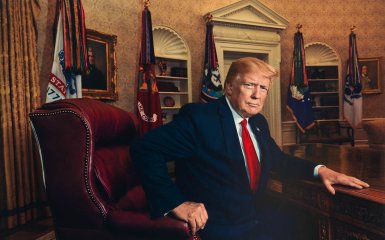
U.S. President Donald Trump is working on a Ukraine Victory Fund to be financed by new tariffs on China. He has instructed Treasury Secretary Scott Bessant to discuss the plan with European counterparts ahead of Ukrainian President Volodymyr Zelensky's visit to Washington on Friday, Oct. 17.
Points of attention
- President Trump is working on creating a Ukraine Victory Fund to support the Armed Forces of Ukraine by imposing new tariffs on China.
- The strategy aims to ease political pressure on Putin, encourage peace negotiations, and change the approach to the war in Ukraine.
- Discussions involve imposing a 500% tariff on imports from China to arm the Ukrainian army and put economic pressure on Putin.
The US may create an aid fund for the AFU with the help of tariffs for China
The American leader, who previously claimed that Zelenskyy "does not have the trump cards" for military victory, is increasingly losing patience with Kremlin dictator Vladimir Putin, and his proposal to change the approach to the war in Ukraine was a notable change of position.
This rhetoric was also echoed by US Defense Secretary Pete Hegseth, who stated at a meeting of NATO defense ministers that the US is ready to support Kyiv "in a way that only the United States can" if Russia continues to evade peace talks.
Discussions in Brussels focused on the possible supply of long-range Tomahawk missiles to Ukraine and financing the country's armed resistance as the fourth year of a full-scale war draws to a close.
Trump has instructed the ambassador and me to let our European allies know that we support the idea of imposing — call it what you will — a “tariff on Russian oil” on China or a “Ukraine victory tariff” on China. But our Ukrainian and European allies must be ready to join in. We will respond if our European partners are with us,” Bessent told reporters.
The strategy reportedly involves imposing a 500% tariff on imports from China, with the proceeds going to arm the Ukrainian army. The plan is designed to exert maximum economic pressure on Putin, whose military machine depends on Chinese support, to force him to sit down at the negotiating table with Trump and Zelenskyy.
Journalists note that previously the idea of imposing sanctions on China for purchasing Russian oil has met with resistance from European governments. And, although NATO has called Beijing a "key accomplice" in Russia's war, many alliance countries, including Britain, have refused to consider China an enemy.
By the way, Ukrainian Defense Minister Denys Shmyhal told allies that Ukraine needs $120 billion to finance another year of resistance in 2026. At a meeting at NATO headquarters, co-chaired by Britain, there was a discussion of how to raise half of this amount, which, according to Shmyhal, should be provided by Kyiv's allies.
The second "important topic" was the supply of long-range missiles. "Their name is known to everyone," he added.
European NATO sources said they support the move to transfer Tomahawk missiles to Ukraine, which would give the country the ability to strike Russian targets far behind the front line, but acknowledged that the decision is entirely up to the US president. Shmyhal noted that such a decision cannot be made at a meeting of NATO defense ministers and must be approved personally by Trump and Zelenskyy.
If Trump agrees, European countries will likely have to pay for supplies and training through NATO's Purl program, under which American weapons are transferred to Ukraine at the expense of European governments.


