

US President Donald Trump has ordered the deployment of a specialized WC-135R Constant Phoenix aircraft to Japan. It is also often called the "Nuke Sniffer". The main task of this aircraft is to detect radioactive particles and record nuclear activity.
Points of attention
- Both the US and Russia are parties to key nuclear testing agreements, but recent signals suggest a potential shift towards full-scale nuclear tests.
- The deployment of the WC-135R Constant Phoenix to Japan and its mission to monitor nuclear activities highlight the geopolitical tensions and uncertainties surrounding global nuclear proliferation.
What is known about the WC-135R Constant Phoenix mission
According to journalists, on December 4, he was spotted during a flight near the Pacific coast of Russia.
What is important to understand is that this happened on a course where potential nuclear tests are regularly monitored.
The "Nuclear Sniffer" collects solid and gaseous emissions to monitor compliance with the Limited Nuclear Test Ban Treaty.
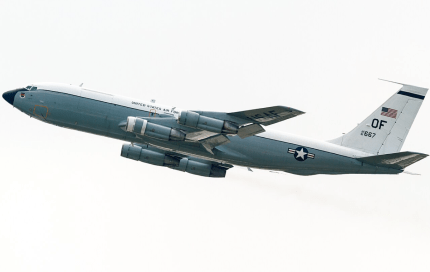
In addition, it is noted that the aircraft is temporarily based in Japan, and its deployment took place in November 2025.
The journalist draws attention to the fact that Trump made the decision to transfer the WC-135R Constant Phoenix closer to Russian territory when dictator Vladimir Putin ordered an assessment of Russia's readiness for possible full-scale nuclear tests.
Both states formally remain parties to two agreements — the 1963 Atmospheric and Underwater Test Ban Treaty and the 1996 Comprehensive Nuclear-Test-Ban Treaty. But increasingly frequent signals from Moscow and Washington indicate a weakening of the regime of control over nuclear explosions.


