
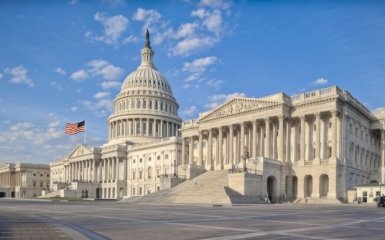
US Congress may renew amendment banning any trade with Russia
Points of attention
- The US Congress is considering renewing the Jackson-Vanik Amendment, which could result in a complete ban on trade with Russia.
- The amendment was initially passed in 1974 to exert political pressure on the Soviet Union and was repealed in 2012, but now there are efforts to bring it back amidst escalating tensions.
US Congress may return amendment to ban trade with Russia
A bill has been introduced in the US Congress to restore the Jackson-Vanik Amendment in order to halt trade with Russia.
This was stated by US Congressman from the Republican Party Joe Wilson on the social network X.
Following the attack on Poland, I am grateful to introduce this bill to restore the Jackson-Vanik Amendment to Russia, which would stop all trade with this terrorist dictatorship.
After the attack on Poland, I’m grateful to introduce this bill to reimpose Jackson-Vanik on Russia cutting off all trade with this terrorist dictatorship. President Obama and John Kerry wrongfully repealed this law during the misguided Russia Reset which encouraged war criminal… pic.twitter.com/SVwjXB2vNQ
— Joe Wilson (@RepJoeWilson) September 10, 2025
At the same time, he spoke out against the previous government and called the "reset" of relations with the Russian Federation a mistake. He noted that this pushed the illegitimate Russian President Vladimir Putin to occupy Crimea.
Presidents Obama and John Kerry wrongly repealed this law during a misguided "reset" of relations with Russia that pushed war criminal Putin to occupy Crimea.
He also believes that US President Donald Trump will fix the situation.
"Trump will fix everything," the congressman summed up.
The Jackson-Vanik Amendment is a US law that was passed in 1974.
It prohibited normal trade with countries with "bad economies" (non-market economies) if these countries did not let people out of the country (for example, Jews from the USSR). That is, in fact, it was a way to put pressure on the Soviet Union.
After the collapse of the USSR, the law formally continued to apply to Russia. However, US presidents "froze" it every year in order to trade.
In 2012, it was finally abolished and replaced by the Magnitsky Act (sanctions against specific Russian officials).


