
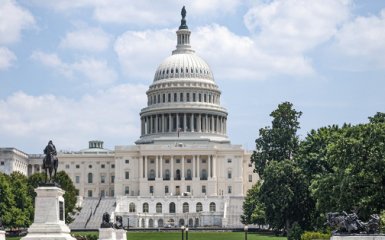
On the evening of October 9, the US Senate approved its version of the National Defense Authorization Act (NDAA) for fiscal year 2026, which provides for an increase in the amount of authorized funding for the Ukraine Security Assistance Initiative (USAI) to $500 million.
Points of attention
- The US Senate has passed a $500 million defense budget bill for Ukraine as part of the National Defense Authorization Act for fiscal year 2026.
- The bill includes important amendments such as the extension of the security assistance program for Ukraine and additional authority for countering drone threats to military facilities.
- The House and Senate will enter a reconciliation process to resolve differences between the two funding packages before the final law is passed by the end of the year.
The 2026 US defense budget includes $500 million for Ukraine
The Republican-led Senate passed the bill by 70 votes to 20, providing $924.7 billion in funding for fiscal year 2026.
The vote came after an agreement was reached to "unblock" the legislation.
The bill's passage allows the House and Senate Armed Services committees to begin a sometimes difficult and lengthy negotiation process in which lawmakers seek compromise between each house's versions of the bill to pass the final law. The House version of the NDAA provides for a smaller budget of nearly $893 billion.
The NDAA was submitted to the Senate in early September. Voting continued throughout Thursday evening, with senators rejecting more than a dozen amendments and 50 additions before moving on to consider the bill.
Among the amendments passed was the repeal of the authorization for the use of military force in Iraq, which was also included in the House of Representatives package of bills.
The bill also included an amendment proposed by Republican Senator Tom Cotton and Democratic Representative Kirsten Gillibrand, which would provide additional authority for the Pentagon to counter drone threats to military facilities.
The New York Times writes that the Senate bill also provides for the extension of the Ukraine Security Assistance Initiative (USAI) until 2028 and an increase in the amount of authorized funding to $500 million in 2026.
Among the rejected amendments was a proposal from Senate Democratic Minority Leader Chuck Schumer, who hoped to block funding for the modernization of the Qatari aircraft, which US President Donald Trump has adopted as a replacement for Air Force One.
The House and Senate will now head to a reconciliation committee to resolve differences between the two funding packages, with a final version expected to pass both chambers by the end of the year.


