
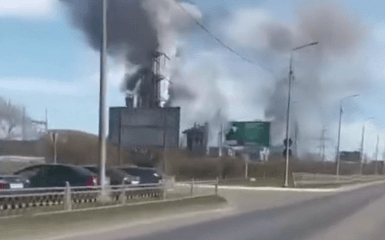
The PhosAgro plant in Cherepovets, Vologda Oblast, Russia, is on fire after a daytime drone attack. It is one of the largest enterprises that produces raw materials for explosives.
Points of attention
- The PhosAgro chemical plant in Cherepovets, Russia, caught fire after a drone attack, causing serious consequences for the industry as one of the largest producers of ammonia and ammonium nitrate in the country.
- The facility plays a crucial role in providing raw materials for explosives and gunpowder, making it a significant target for attacks that can have far-reaching implications.
“Bavovna” in Cherepovets: what is known
In the Vologda region of Russia, unidentified drones attacked a factory in the industrial zone of the city of Cherepovets. A fire broke out at the enterprise — local residents recorded it on video and posted it online.
Vologda Oblast Governor Georgy Filimonov reported only that several drones had been shot down, including over an industrial zone. He did not mention the attack on the factory and the fire.
Apatite JSC is one of the largest producers of ammonia and ammonium nitrate in Russia. These substances are critically important raw materials for the defense industry — they are used in the production of explosives and gunpowder. The plant is part of the PhosAgro group — one of the largest chemical complexes in Europe.
The company also produces:
phosphorus-containing mineral fertilizers;
phosphoric acid;
sulfuric acid.
OSINT specialists from the Cyber Bread channel confirmed the hit on the ammonia production of the Cherepovets-Azot plant on April 13, 2026.
According to analysts, the published video shows black smoke from burning in two of the company's three ammonia plants — "Ammonia-1" and "Ammonia-2". Their total production capacity is 900 thousand tons per year.
Separately, there are reports of a possible hit on the ammonia storage facility of these workshops. It is significant that after the start of Russia's full-scale invasion of Ukraine, this storage facility was additionally protected with a special metal structure — specifically from drone strikes.
According to analysts, the affected workshops provide:
about 6% of ammonia production in all of Russia;
The plant is responsible for approximately 10% of all Russian ammonia production.


