
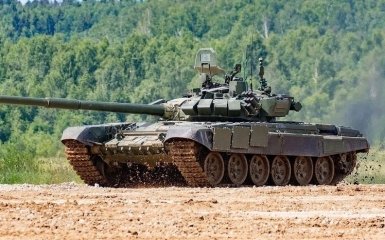
The Ukrainian Armed Forces destroyed a Russian T-72 Ural tank in the Pokrovsk direction. The strike was carried out using a Nemesis drone, which disabled the tank.
Points of attention
- The Ukrainian Armed Forces successfully destroyed a Russian T-72 Ural tank in the Pokrovsk direction with a Nemesis drone.
- The T-72 tank is a formidable armored vehicle known for its maneuverability and ability to withstand anti-tank weapons.
- Despite its age, the T-72 tank remains a significant threat on the battlefield with its powerful gun and armor designed to resist anti-tank weapons.
Ukrainian Armed Forces destroy Russian tank with Nemesis drone
This was reported by the operational-strategic group of troops "Khortytsia".
In the Pokrovsky direction, Ukrainian forces have struck another precise blow to Russian armored vehicles. Operators of the "Predators of the Heights" unmanned systems battalion destroyed a T-72 "Ural" tank, one of the most widespread and dangerous models of armored vehicles in service with the Russian army.
Using the Nemesis drone bomber, Ukrainian pilots identified the target, executed it with precision, and turned the tank into a pile of metal.
This is a main battle tank, developed in the Soviet Union back in the 1970s. Despite its age, the vehicle has undergone a number of upgrades and still poses a significant threat on the battlefield.
The tanks of this series have a powerful 125 mm gun, capable of firing both conventional shells and guided missiles. Thanks to the automatic loader, the T-72 requires less crew than most of its counterparts and is able to respond quickly to changing situations.
Its armor is designed to withstand anti-tank weapons, and its maneuverability allows it to operate in difficult conditions, including assault operations and support for breakthroughs.


