
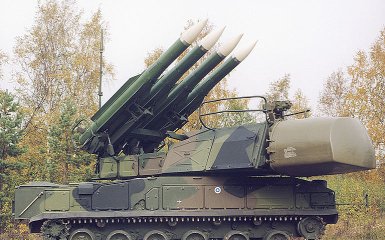
In the Kursk direction, Ukrainian operators of the Unmanned Systems Forces detected and hit three Buk missile systems of the Russian occupiers within 12 hours.
Points of attention
- Ukrainian Unmanned Systems Forces detected and destroyed three Buk air defense systems of the Russian army in the Kursk region within a short span of 12 hours.
- FPV drones were utilized to deliver precise strikes on camouflaged Buk-M2 launcher and damaged radars of Buk-M3 SAM launchers, reducing the combat capabilities of the enemy's air defense systems.
- The successful operations were carried out by operators of the 413th OBBS 'Reid' of the SBS in cooperation with the combined detachment of the BPS 'Jmil' of the 78th ODSHP.
SBS hit 3 Russian Buk missile systems in Kursk region
The Russian targets were hit by operators of the 413th OBBS "Reid" of the SBS in cooperation with the combined detachment of the BPS "Jmil" of the 78th ODSHP.
This was reported by the Command of the Unmanned Systems Forces of the Armed Forces of Ukraine.
In particular, the pilots used FPV drones to precisely strike a Buk-M2 launcher (launcher-charger) that the occupiers had hidden in a forest strip. This led to the detonation of the missiles and their destruction.
The battalion's operators also hit two Buk-M3 air defense missile launchers, damaging their radars.
The radar is a key element of the air defense system, designed to "illuminate" air targets and guide missiles. Its destruction undermines the combat capabilities of the complex.
"Buk-M3" (9K37M3/SA-17 Grizzly) is a modern mobile anti-aircraft missile system of the Russian Federation, one of the key elements of the enemy's air defense. It is capable of destroying air targets at altitudes of up to 35 km and tracking them at a distance of up to 70 km. The cost of the complete system is about 45 million dollars.


