
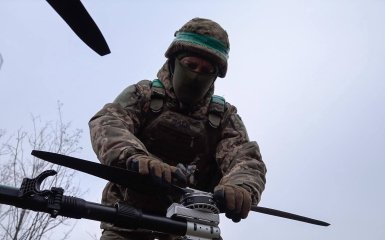
The New York Times spoke with Ukrainian soldiers and developers and concluded that during 2025, the Russian-Ukrainian war provoked truly terrifying transformations on the battlefield that could lead to very unexpected consequences. First of all, we are talking about the beginning of the dominance of killer robots on the front.
Points of attention
- The collaboration between weapons manufacturers, governments, venture capitalists, and engineers has accelerated the advancement of killer robots, raising uncertainties about the future implications of these technologies.
- Experts express apprehension about the consequences of this technological advancement, with warnings that the use of autonomous drones may lead to unpredictable outcomes and dilemmas in strategic decision-making.
Killer robots are a powerful but dangerous weapon
A real shock for the Russian army was the appearance of Bumblebee drones on the front, which the Ukrainian Defense Forces began to actively use.
The enemy described Bumblebee as "a mysterious drone with chipsets and a motherboard of the highest quality, corresponding to the level of the world's leading microelectronics manufacturers."
Moreover, Russian experts concluded that this new technology will demonstrate its effectiveness in the future, and the scope of its application "will continue to expand."
Bumblebee drones rarely fly alone. Ukraine has become a live-fire testing ground, where weapons manufacturers, governments, venture capitalists, advanced units, and programmers and engineers from across the West collaborate to create weapons.
Moreover, the development and use of autonomous drones has reached a new level.
In fact, they independently take off, hover in the air, fly to the desired enemy locations, recognize Russian targets, and also deliver the final blow.
The main problem is that even “strikingly accurate” weapons, such as GPS-guided missiles or laser-guided bombs, often hit the wrong targets, killing innocent people.
The de facto argument is that semi-autonomous drones are significantly worsening this situation.
"I think we've created a monster... And I'm not sure where it will lead," physicist Nazar Bihun, who writes software for striking enemy targets, told reporters.


