
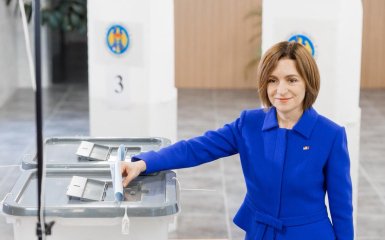
Moldovan leader Maia Sandu's political force, Action and Solidarity (PAS), has crossed the 50 percent threshold of voter support after counting 99.5 percent of votes in the parliamentary elections. This de facto means that she has the right to form a government alone.
Points of attention
- With PAS likely to secure approximately 55 seats in the 101-seat parliament, Maia Sandu's party is poised to lead with a majority, signaling a significant political shift in Moldova.
- The outcome of the elections highlights the growing support for Sandu's party and the implications for Moldova's internal and external policies in the future.
Sandu's party wins Moldovan elections
Journalists draw attention to the fact that the pro-government "Action and Solidarity" has already received the support of 50.03% of voters after counting 2,263 out of 2,274 protocols.
According to the latest figures, PAS could win around 55 seats in the 101-seat parliament.
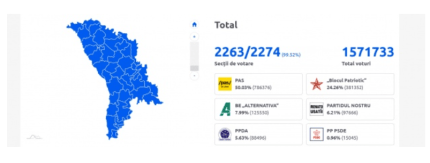
What is also important to understand is that the pro-Russian "Patriotic Bloc" led by ex-president Igor Dodon, who is an accomplice of dictator Volodymyr Putia, received 24.26% of the vote.
The "Alternative" bloc also made it into the top three, receiving 7.99%.
Also entering parliament are a formally pro-Romanian party accused of ties to the FSB, Democracy at Home, and Our Party, led by populist Renato Usati.
As mentioned earlier, 101 deputies are elected to the Moldovan parliament, which means that Maia Sandu's PAS party will have a single majority.
De facto, it will be able to form a government without uniting with other political forces.
In the elections in Moldova, pro-Russian regions showed lower turnout, which allowed the ruling party to receive higher support than expected, journalists note.


