
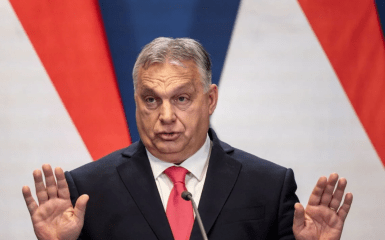
Hungarian Prime Minister Viktor Orban, who is running for re-election, has once again resorted to allegations of alleged Ukrainian interference in his country's internal affairs and criticized the Ukrainian authorities and President Volodymyr Zelensky.
Points of attention
- Viktor Orban cynically accuses Ukraine of attempting to interfere in Hungary's internal affairs and support anti-Trump, spreading false claims about 'billions of dollars' being transferred through Hungary.
- The Hungarian Prime Minister resorted to allegations against Ukraine and President Volodymyr Zelensky without providing concrete evidence, claiming 'evidence received' of billions being transferred to oppose Donald Trump and support a pro-Ukrainian candidate from the US Democratic Party.
Orban lashed out with accusations against Ukraine and Zelensky
In particular, the Hungarian politician, without providing evidence, stated about "evidence received" according to which the President of Ukraine allegedly transferred "billions of dollars" through Hungary in support of the "pro-Ukrainian candidate" from the US Democratic Party and to oppose Donald Trump.
According to Orban, Ukraine is allegedly trying to influence the Hungarian elections as well.
They want a pro-Ukrainian candidate. They send Ukrainian agents to us and support the pro-Ukrainian opposition.

Viktor Orban
Prime Minister of Hungary
The Hungarian Prime Minister also repeated his previous statements about the so-called "golden convoys," which, according to him, allegedly followed not only to Ukraine, but also in the opposite direction, and added that Zelensky is ready to pay "billions" for political support.
⚠️ Another scandal… skeletons just keep falling out of @ZelenskyyUa’s closet. 👀
— Orbán Viktor (@PM_ViktorOrban) March 27, 2026
Billions of dollars were funnelled from Ukraine to the West through Hungary. pic.twitter.com/MjHS5vVTc3
In another post, Orban “promises Zelensky” that “there will be no pro-Ukrainian government” in Hungary. He tries to present his refusal to help Ukraine repel Russian aggression as “the power to say ‘no’.”
In this context, he recalled the events of 1989, the migration crisis of 2015-2016, as well as the current European Union initiatives to assist Ukraine, which he criticizes.
As reported, parliamentary elections in Hungary are scheduled for April 12.


