
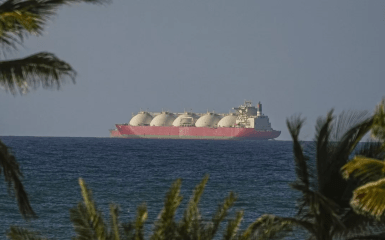
At least two merchant ships have reported being attacked while passing through the Strait of Hormuz, exacerbating tensions in one of the world's key energy routes. The incident came shortly after Tehran said it would tighten military control over the waterway.
Points of attention
- Iran's recent attack on merchant ships in the Strait of Hormuz has intensified tensions in a critical energy route.
- The Iranian military has tightened control over the strait following the shelling of ships, leading to concerns about disruptions in the global oil trade.
Iran fires on ships in the Strait of Hormuz
According to maritime security sources, the vessels received radio messages from Iranian naval forces about the alleged "closure of the strait" and a ban on passage.
At the same time, marine trackers recorded a convoy of eight tankers passing through the strait - the first large-scale movement of ships since the start of the war between the US and Israel against Iran.
After the shelling of the ships, the Iranian military announced a return to a regime of strict control over the strait, through which about a fifth of the world's oil trade passed before the war.
Tehran explained the move by the actions of the United States, which, they said, continues to blockade Iranian ports and violate shipping agreements.
Iran's Supreme Leader Mojtaba Khamenei said in a Telegram message that the Iranian Navy is ready to inflict "new bitter defeats" on its enemies.
These statements have increased uncertainty in the energy market and raised the risks of disruptions in the supply of oil and gas through the strategic route.
US President Donald Trump said that talks with Iran are ongoing and could bring "some good news," but at the same time warned of a possible resumption of hostilities if an agreement is not reached before the end of the temporary ceasefire.


