
NATO allies can provide Ukraine with $100 billion over 5 years through fixed contributions from each member country depending on the size of the economy.
Latvia explained how to secure $100 billion for Ukraine from NATO
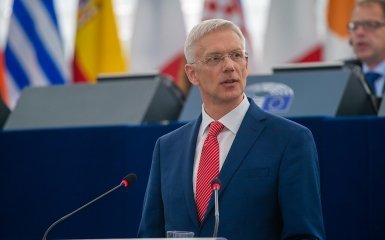
In a comment to Radio Svoboda, the Minister of Foreign Affairs of Latvia Krishjanis Karinsh said that the best way would be, perhaps, not to agree on the amount, but to agree on the percentage of GDP.
So 0.25% for Latvia feels the same as 0.25% for Germany or France. Of course, it will be a significant amount from Germany and France, which have large economies. It's less money from Latvia, which has a smaller economy, but it will feel the same.

Krišjānis Kariņš
Latvian MFA chief
Latvia plans to spend 0.25% of its GDP on aid to Ukraine in 2024. The contribution from Germany will be 0.2% of GDP. And such countries as France, Italy, Spain spend only 0.05-0.15% of GDP.
Karinsh also noted that there is an understanding among partners that Ukraine needs additional funds.
According to him, the aid package may consider the future expenses that the member states will make this year, which have already been announced.
Fund for Ukraine for $100 billion
On the eve of the meeting of NATO foreign ministers in Brussels on April 4, a number of mass media reported on the NATO Secretary General's proposal to create a five-year fund for Ukraine in the amount of 100 billion dollars.
Stoltenberg later confirmed this intention, noting that it would ensure long-term and predictable aid for Ukraine from all allies. However, he did not specify the amount.
However, such an idea caused scepticism in some countries — 100 billion for five years, that's 20 billion per year. This year, such an amount was already planned for military aid to EU countries.
The head of the Ministry of Foreign Affairs, Dmytro Kuleba, after a meeting with his colleagues at the NATO headquarters on April 4, expressed doubt that they could implement the idea.
Now, NATO is trying to raise $500 million annually for an aid package. In the current financing model, this initiative has zero chances, because they cannot collect $500 million; they will have to collect $20 billion. But if it is possible to calculate every one's participation in a mandatory manner, then this idea has the right to exist and a chance for implementation.

Dmytro Kuleba
Ukrainian MFA chief


