
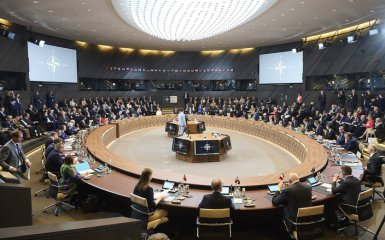
The editorial staff of The Telegraph carefully analyzed the final communiqué of the NATO summit in The Hague and concluded that the Alliance in this document softens its position towards the aggressor country Russia. According to media reports, this is a result of pressure from US President Donald Trump.
Points of attention
- The 2024 communiqué reaffirms NATO's commitment to supporting Ukraine's security but also hints at a less confrontational tone towards Russia, raising questions about the Alliance's evolving strategy.
- Despite ongoing tensions, the dynamics between NATO, Russia, and Ukraine continue to evolve, reflecting complex geopolitical considerations and the differing priorities of key world leaders.
Why is NATO changing its position on Russia?
Journalists point out that the wording in the summit communique is indeed weaker compared to previous years.
Thus, in the current communiqué, the 32 NATO members:
“reaffirm their unwavering sovereign commitment to support Ukraine, whose security contributes to our own security, and to this end will include direct contributions to Ukraine's defense and its defense industry when calculating allies' defense spending.”
What is important to understand is that in the 2024 communiqué, the Alliance not only reiterated that Russia is an aggressor country, but also emphasized that Ukraine's future lies in NATO.
2 years ago in Vilnius, members of the bloc declared: “Russia is responsible for its illegal, unjustified and unprovoked aggressive war against Ukraine.”
Ukrainian leader Volodymyr Zelensky has pushed for Western support to further condemn Russia's invasion, but Donald Trump has refused to sign such a document, fearing it would hinder his peace talks with Russian dictator Vladimir Putin.


