
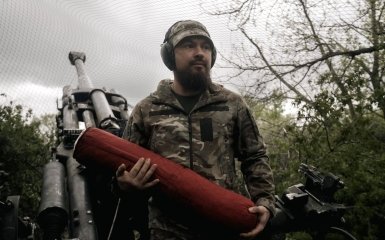
A report by the US Military Intelligence Agency indicates that in early 2026, the Ukrainian Defense Forces did indeed conduct a successful counteroffensive, during which they were able to liberate a significant part of the territories occupied by the Russians — about 400 square kilometers.
Points of attention
- Minister of Defense Mykhailo Fedorov's agreement with Elon Musk played a crucial role in enabling Ukrainian troops to surge forward and strategically outmaneuver the Russian army.
- The Kremlin's tough measures against communication platforms like Telegram further worsened the situation for Russian soldiers in Ukraine, impacting coordination and strategic communications.
The Pentagon analyzed Ukraine's recent success on the front
American intelligence officers point out that this is the first truly successful counter-offensive operation after the territorial gains of the Defense Forces in 2023.
The key factor that ensured the unexpected and impressive breakthrough of Ukrainian troops a few months ago was the disconnection of thousands of portable Starlink Internet terminals from the Russian occupiers.
This decision was made and implemented by the new Minister of Defense of Ukraine, Mykhailo Fedorov, with the support of American billionaire and businessman Elon Musk.
Thus, the military capabilities of the Russian army were "temporarily but significantly weakened."
Since the enemy was not prepared for such a development, he lost full communication on the battlefield for a certain period.
It's no secret that Russian soldiers have previously actively used Starlink terminals to coordinate movements and operations with drones.
Russian troops in Ukraine have suffered a double blow to their communications systems after the Kremlin took tough measures against the Telegram messenger, a decision that angered Russian soldiers who used the messenger to communicate on the battlefield.


