
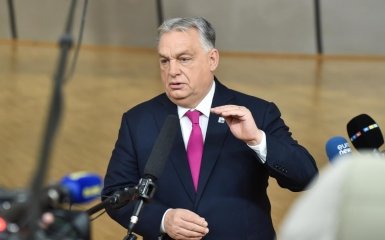
Orban is trying to intimidate Hungarians by threatening to send them to the front in Ukraine if they do not re-elect him in the April elections.
Points of attention
- Orban's party in Hungary is trying to scare Hungarians into re-electing him by using fear tactics and threats of sending them to the front in Ukraine.
- The campaign video released by Hungary's ruling Fidesz party manipulates the topic of Russia's war against Ukraine to favor Orban's party.
Orban's party manipulates the topic of Russia's war against Ukraine
Hungary's ruling Fidesz party has released a campaign video exploiting the war in Ukraine, reports .
As the publication notes, Prime Minister Viktor Orban is building his election campaign by offering Hungarians what he describes as a choice between "war and peace."
In particular, he claims that the opposition party "Tisa", which has every chance of winning the April parliamentary elections, is allegedly planning to involve Hungary in hostilities on the side of Ukraine, on the orders of the European Commission.
It is this narrative that is exploited by a 33-second AI video posted on the Facebook page of the Budapest branch of the Fidesz party.
It presents two scenes. In the first, a little girl and her mother at home in Hungary are grieving for their father and husband, respectively, who have gone to the front. In the second scene, a Hungarian soldier is shown dying in the war.
So far it's just a nightmare, but Brussels is preparing to make it a reality... Let's not take any chances. Fidesz is the safe choice! — says the caption to the video.
The Hungarian opposition expressed outrage over the publication of the video. The leader of the Tisza party called the video "disgusting," "deeply outrageous," and unforgivable.
This is not politics, this is heartless manipulation.
According to Reuters, in most polls, Tisza has an advantage over Orban's Fidesz party by 8-12 percentage points. And while 57% of Orban's supporters truly believe that Tisza wants to send Hungarians to the front, among opposition supporters there are virtually no such figures at the statistical level.


