

On the night of October 3, 13,000 head of livestock were killed in a Russian attack on an agricultural enterprise in Novoselivka. According to the head of the Novovodolazhsk community, Oleksandr Yesin, the occupiers struck the agricultural enterprise with approximately 20 “Shakheds”.
Points of attention
- The head of the Novovodolazhsk community, Oleksandr Yesin, provided updates on the situation, highlighting the destruction caused by the Russian drones.
- While a security guard was injured during the evacuation, there were no other casualties reported in the aftermath of the attack.
Animals continue to die from Russian attacks
As noted by the head of the Novovodolazhsk community, Oleksandr Yesin, the first explosions occurred in the village of Novoselivtsi at around 01:15 on October 3.
A pig farm, which housed 15,000 heads of cattle, was attacked by Russian invaders.
Yesin told reporters that about 13,000 pigs died, with about 10% of the animals remaining alive on the farm.
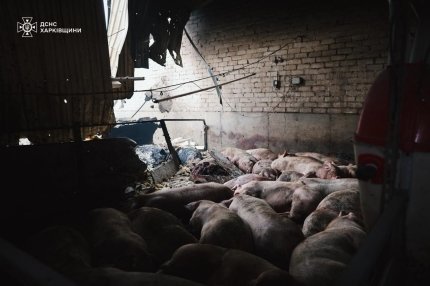
There were about 10 old concrete pig stys on the farm, dating back to Soviet times. The pig stys were targeted — some of them were hit three times by drones. Out of the 10 pig stys, 8 were completely burned out, — said the head of the community.
The second wave of Russian drones covered the pig farm in one and a half to two hours.
Alexander Yesin estimated that in total the Russians hit the farm with about 20 "Shaheeds".
In reality, there were even more enemy drones flying, but some of them were destroyed by air defense forces.
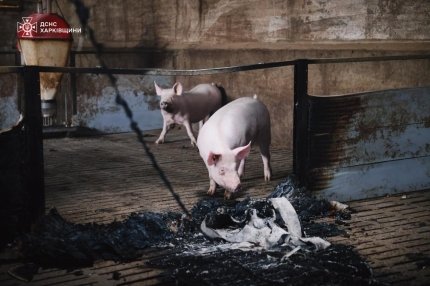
In addition, it is noted that during the evacuation from the territory of the agricultural company, a security guard was injured - he injured his leg while running away.
He was given medical assistance on the spot. There are no more victims,” Yesin said.


