
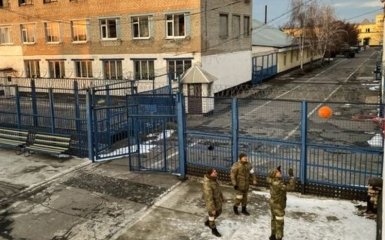
At least 300 places of detention of Ukrainian prisoners of war and civilians operate on the territory of Russia, the temporarily occupied regions of Ukraine, and in Belarus.
Points of attention
- More than 300 places of detention for Ukrainian prisoners of war and civilians operate in Russia, the occupied regions of Ukraine, and Belarus.
- Russian military personnel use torture and cruel methods against Ukrainian prisoners of war.
- Unlike Ukraine, where we have access to 10 detention facilities through international organizations, there are 300 places of restricted access in Russia.
Russia Detains Ukrainians in 300 Closed Colonies
This was stated by the representative of the Coordination Headquarters for the Treatment of Prisoners of War, Oleg Gushchyn.
How many places do you think there are for Ukrainian prisoners and civilians in Russia and the occupied territories? 5, maybe 10, maybe 20, maybe 100? 300.
According to Gushchyn, unlike Ukraine, which has only 10 such facilities (5 camps and 5 temporary points), and to which international organizations — in particular the Red Cross, the UN, and human rights activists — have free access, the situation in Russia is radically different.
Russia has 300 occupied territories, including the Republic of Belarus. No one has access to any of them — not the Red Cross, not the UN, not the OSCE, not even human rights activists.
The Associated Press recently reported that more than 200 Ukrainian soldiers have died in Russian captivity since the start of the full-scale invasion. According to the publication, many of them died as a result of torture.
One case of ill-treatment became known on April 24, when the body of journalist Viktoriya Roshchina, who died in Russian captivity, was returned to Ukraine. The cause of death has not yet been determined. However, some media outlets have published an investigation, according to which the journalist's body was returned without part of her internal organs.
In addition, Russia regularly tortures Ukrainian prisoners of war. According to Nestor Barchuk, a representative of the international cooperation department of the 1st Corps of the Azov Military University, the Russian military has now begun distributing special instructions that describe in detail the methods of cruel treatment.


