
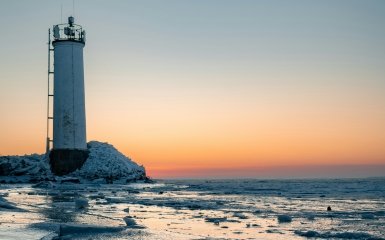
The Baltic Sea has just been hit by anomalous ice — the heaviest in 15 years. This has become a new serious challenge for the regime of Russian dictator Vladimir Putin, as the export of “black gold” has once again come into question.
Points of attention
- Russian authorities are struggling to address the situation due to the lack of tankers with reinforced hulls, causing further complications in the shipment of crude oil and fuel.
- To stabilize the situation, Russia is deploying additional icebreakers to the Gulf of Finland in efforts to increase the fleet and facilitate oil export operations.
Weather conditions complicate Russian oil exports
This was reported by Bloomberg journalists, citing orders from port administrations and data from industry experts.
They point out that the Gulf of Finland, through which about 40% of Russian oil exports by sea pass, is currently almost completely covered in ice.
In addition, it is noted that the Primorsk oil terminal and the Vysotsk port have banned entry of non-ice-class vessels without individual icebreaker escort.
The chief weather forecaster of St. Petersburg, Alexander Kolesov, made a statement on this occasion.
He officially confirmed to the media that the area of glaciation continues to grow — such anomalous glaciation has not occurred in the last 15-16 years.
The Russian authorities cannot do anything in the current situation, because they simply lack tankers with reinforced hulls.
Overall, all this caused delays in the shipment of crude oil and fuel.
To stabilize the situation, Russia is transferring the icebreakers "Sibir" and "Murmansk" from the Arctic to increase the fleet in the Gulf of Finland to six units by the end of the month.


