
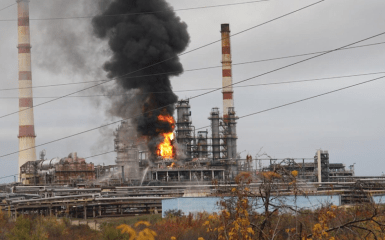
After the attack by Ukrainian drones, the Saratov Oil Refinery on the Volga River stopped primary oil processing.
Points of attention
- Following Ukrainian drone attacks, the Saratov Oil Refinery on the Volga River ceased primary oil processing, leading to explosions and fires that damaged civilian infrastructure.
- The primary processing unit at the plant, with a daily capacity of about 20,000 metric tons of oil, may remain closed until the end of the month as reported by Reuters.
- The strikes likely caused damage to the CDU-6 unit, the sole primary processing unit at the facility, impacting Russia's oil processing with the Saratov Refinery processing around 5.8 million tons of oil in 2024.
Saratov refinery stopped its work
Reuters reports this, citing two industry sources. It is noted that the plant may remain closed until the end of the month.
The Ukrainian military reported on the strikes on the Saratov Oil Refinery on November 11. These attacks caused explosions and a fire in the area of the facility.
The plant was also hit on Friday, November 14.
The governor of the Saratov region reported damage to civilian infrastructure. As a result, a large tank at the plant caught fire.
Rosneft, which controls the plant, did not respond to a request for comment.
Sources said the strikes may have damaged the CDU-6 primary oil processing unit, the only primary processing unit at the plant. Its rated daily capacity is about 20,000 metric tons, or 147,000 barrels of oil.
The authors note that in 2024, 5.8 million tons of oil were processed at the Saratov Refinery. In the overall picture, this is about 2.2% of oil processing in Russia.
The plant produced 1.9 million tons of diesel fuel, 1.2 million tons of gasoline, and 1 million tons of fuel oil.


