
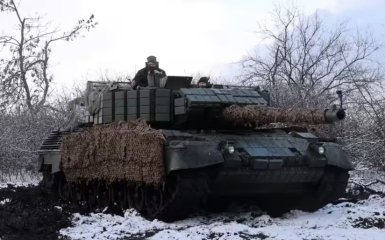
The Russian military is "stuck" near Pokrovsk in the Donetsk region and is generally showing a tendency towards exhaustion.
Points of attention
- Russian troops near Pokrovsk in the Donetsk region are experiencing exhaustion and reduced motivation to fight.
- Ukrainian UAV and infantry units are successfully repelling enemy attacks, causing depletion of Russian forces.
- The cooperation between Ukrainian UAV units and infantry is establishing an effective defense strategy starting from the city of Pokrovsk.
The Russian army is “stuck” near Pokrovsk
This was reported by Viktor Tregubov, spokesman for the Operational-Strategic Group of Forces "Khortytsia".
According to him, an attack from the south, like an attempt to bypass the city from the west, will fail.
There is a certain tendency of exhaustion among Russians. I am not saying that Ukrainians have some kind of second, third, or one hundred and fifteenth breath... But Russians have indeed begun to experience a certain physical, moral, and material exhaustion. It exists, it is noticeable.

Viktor Tregubov
Spokesperson of the Khortytsia Municipal Administrative District
He attributes this situation primarily to the effective actions of Ukrainian UAV units, which, according to him, managed to establish effective defense, starting from the city of Pokrovsk, as well as the cooperation between UAV units and infantry, including assault infantry.
Currently, the spokesman says, Russian forces have even more energy in other areas than at Pokrovsky. But in general, he says, against the backdrop of the start of the negotiation process between Russia and the United States, a decrease in the motivation of Russian soldiers to fight is observed in the area of responsibility of the Khortytsia Military District.


