
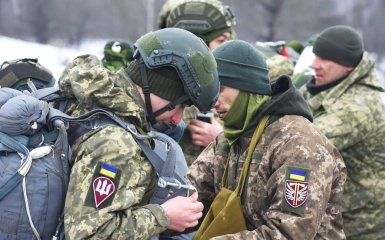
The Ukrainian Defense Forces began thorough preparations for assault operations in the Oleksandrivka direction at the end of last year. As part of this, assault units were deployed there for a surprise strike on the Russian army.
Points of attention
- These actions signify a tactical success rather than a full-scale counteroffensive, as emphasized by Filatov.
- The Ukrainian Defense Forces' thorough preparations and surprise strike disrupted the pre-spring campaign of the Russian army, showcasing strategic prowess.
The breakthrough of the Ukrainian Armed Forces at the front was clearly planned
The commander of the 1st Separate Assault Regiment, Dmytro "Perun" Filatov, spoke about the plans and successes of Ukrainian soldiers.
He draws attention to the fact that offensive actions in the Oleksandrivka direction and in the Hulyaipol area are actually the only plan.
But it was not concentrated in the Hulyaipol area. For example, we entered the area between Dobropillya (Zaporizhzhya region, — ed.) and Novy Zaporizhzhia to inflict a flanking blow on the enemy, to press him there, so that this would become a prerequisite for the further liberation of the Dnipropetrovsk region, — Filatov explained.
He also officially confirmed that his soldiers were able to break through the enemy's defenses 12 kilometers deep into Russian positions.
However, it is important to understand that these actions do not yet constitute a "counteroffensive." Dmytro "Perun" Filatov himself considers these achievements to be "a minor success."
These are offensive actions to improve our tactical position and stabilize the front line in the area where the enemy has transferred its forces.


