
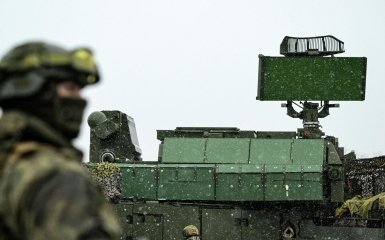
The Main Intelligence Directorate of Ukraine records numerous cases of Starlink satellite communication terminals being disconnected by the occupation forces along the entire front line. The occupiers are trying to work with an alternative option, namely the Gazprom terminals, but they cannot compete in terms of communication quality with Western technologies.
Points of attention
- Gazprom terminals, operating via the Yamal series of satellites, are inadequate in providing stable video retransmission, posing a significant problem for command posts.
- The Russian government's dependence on a limited number of satellites shows a lack of preparedness in ensuring effective communication across the front line, raising concerns about the army's operational efficiency.
Russian soldiers suffer because of Gazprom terminals
As Ukrainian intelligence officers managed to find out, the Russian invaders received an alternative to Starlink.
However, the main problem for the Russian army is that it is practically impossible to use Gazprom terminals in combat conditions due to the low quality of communication.
"It's just that, as far as I know, Gazprom (ed. — communication terminal), this is a point, b..d," the occupier comments on the quality of Russian satellite systems.
GUR draws attention to the fact that Gazprom terminals are unable to provide stable video retransmission to command posts.
Yes, but maybe something has changed, before that we used to go to the neighbors, the 76th farm, the big Air Force, they had Gazprom, and they didn't take out the broadcast, — complains another Russian invader in the interception.
What is important to understand is that Gazprom's terminals operate via the Yamal series of satellites, five of which are in geostationary orbit.
The Russian authorities should understand that this number is not enough to fully cover the entire front line, but the Kremlin seems not to be too concerned about this.


