
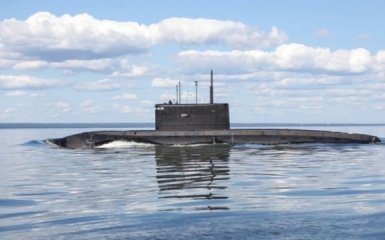
The Swedish Navy encounters Russian submarines in the Baltic Sea "almost weekly" and is preparing to further increase their numbers in the event of a ceasefire or truce in the war in Ukraine.
Points of attention
- The Swedish Navy is encountering Russian submarines in the Baltic Sea almost weekly and is prepared for a potential increase in their numbers post-ceasefire in Ukraine.
- Russia is intensifying its presence in the region by boosting its production of Kilo-class submarines, posing a security challenge for countries like Sweden, Norway, Finland, Estonia, and Lithuania that heavily rely on sea lines of communication.
Russia has activated its submarines in the Baltic
This was stated by the Chief of the Operations Department of the Swedish Navy, Captain Marko Petković.
He said Moscow is “constantly increasing” its presence in the region, and sightings of Russian ships are a regular part of life for the Swedish navy. Petkovic said it is “a very common occurrence,” noting that the number of sightings has increased in recent years.
The captain said Russia is increasing its capacity and producing one Kilo-class submarine per year in St. Petersburg and the Kaliningrad region. Russia is conducting a “targeted ongoing modernization program” of its vessels, he said.
Once there is a ceasefire or a truce in Ukraine, it is only possible to assess, and we assess, that Russia will increase its capabilities in this region. So, with that in mind, the Swedish fleet must constantly grow and focus on the big picture.
He noted that Russia's shadow fleet, consisting of oil tankers under a civilian flag, is also a cause for concern, and did not rule out the possibility of using such vessels to launch drones.
The Shadow Fleet is not a military problem in itself, but it can affect our countries from a military perspective.
He explained that the various challenges associated with underwater conditions, including reduced visibility, salinity and temperature, meant that underwater infrastructure was particularly vulnerable in the Baltic region. This was particularly true for Sweden, Norway, Finland, Estonia and Lithuania, which were “totally dependent on sea lines of communication to sustain our societies.”
At the same time, Petkovic believes that NATO's increased vigilance is paying off. He noted that since the launch of Operation Baltic Sentinel in January, "we have not observed any incidents with cables in this region."
First of all, it demonstrates that the Alliance works, that it is united. And we are uniting against one specific threat. Operation Baltic Sentinel has proven that.


