
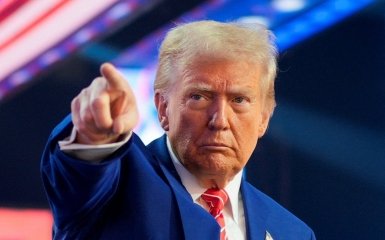
US President Donald Trump has announced massive tariffs on US imports, with the tariffs expected to hit trillions of dollars in trade.
Points of attention
- Trump's announcement of global tariffs will have a significant impact on trillions of dollars in trade, affecting various countries worldwide.
- Russia is excluded from the list of countries facing tariffs due to existing American sanctions, making trade with sanctioned countries already difficult.
- The introduction of reciprocal tariffs and a universal minimum tariff on imports have sparked concerns about potential inflation and the risk of a US recession.
Trump's trade wars have affected almost the entire world
Speaking in the Rose Garden near the White House, the US president announced "very, very good news."
In a few minutes, I will sign a historic decree on reciprocal tariffs for countries around the world. Reciprocal. That means what they do to us, we will do to them. It's very simple. It couldn't be simpler.

Donald Trump
President of the United States
He criticized Thailand, India, Vietnam, and other countries for what he considered unfair tariff policies and tax regimes on American goods. He cited as an example that the United States charges only 2.4% duty on motorcycles, while India charges 70% and Vietnam charges 75%.
Before signing the order, he also spent a long time describing the "unfair tariffs" that other countries had imposed on American goods. "Sometimes friends are worse than enemies," Trump said, referring to the high tariffs imposed by some allies like Japan.
This is one of the most important days in American history. This is our declaration of economic independence. For countries that treat us badly, we will calculate the sum of their tariffs, non-monetary barriers, and other forms of fraud.
He also reiterated that at midnight on April 2-3, the US would impose a 25% tariff on all foreign-made cars. He also announced the introduction of a universal or "minimum base tariff" on imports of 10%.
According to the decree, the US is imposing additional duties in the amount of:
China — 34%
European Union — 20%
Vietnam — 46%
Taiwan — 32%
Japan — 24%
South Korea — 25%
Thailand — 36%
Switzerland — 31%
Indonesia — 32%
Malaysia — 24%
Cambodia — 49%
Great Britain — 10%
South Africa — 30%
Brazil — 10%
Bangladesh — 34%
Singapore — 10%
Israel — 17%
Philippines — 17%
Chile — 10%
Pakistan — 29%
Sri Lanka — 44%
Reciprocal tariffs will come into effect on April 9, 2025. And all countries will start paying the minimum base tariff on April 5.
Moreover, the base tariff of 10% will be added to the tariffs imposed against specific countries. This means, for example, that the tariff on Chinese goods will be 44% (34+10), and on goods from the EU — 30% (20+10).
Canada and Mexico are not yet subject to reciprocal tariffs.
For Ukraine, only a basic duty of 10% is being introduced.
Interestingly, some countries are missing from the list of new tariffs, including Belarus, North Korea, and Russia.
The NYT allegedly learned the reason for this decision. The American publication cites a White House representative who spoke on condition of anonymity.
A number of sanctioned countries are not affected by the reciprocal tariffs announced on Wednesday because "they already face extremely high tariffs."
Moreover, previously imposed American sanctions allegedly already "make any full-fledged trade with these countries impossible."
According to Bloomberg, $33 trillion in global trade is under threat, with countries from Brazil to China facing a 4% to 90% reduction in exports to the US. Average tariffs could rise by 15%, fuelling inflation and increasing the risk of a US recession.
Under the maximum approach, average tariff rates in the US would increase to 2%, which would lead to a 4% reduction in US GDP and an increase in prices of almost 2.5% over two to three years.
The impact on trading partners in any scenario would be severe. China, the EU, and India could lead the list of countries that would be hit hard by the impact on exports to the United States, although their economies could survive. Canada and Southeast Asian countries are likely to experience a larger overall impact.


